Skip to content




Imagine it is 8:15 on a Monday morning.
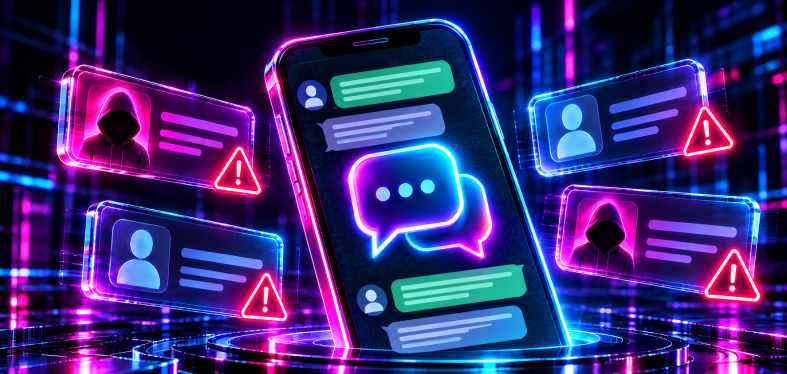
Your finance director gets a WhatsApp message from the CEO.
The photo is right. The writing style feels familiar. The CEO says he is heading into a meeting and needs a confidential payment handled before 10:00.
Then a voice message arrives.
It sounds like him.
At that point, the question is no longer whether the employee knows what phishing looks like. The question is whether they are willing to challenge what appears to be a direct request from the CEO.
That is Executive Impersonation: an attacker using the identity, authority, image, voice, or digital presence of a senior leader to convince someone to take an action they otherwise might question.
For CISOs, Executive Impersonation is not just a social media nuisance or reputation issue. It can lead to payment fraud, credential theft, data exposure, phishing, and serious disruption to trusted business processes.
And increasingly, the attack may happen entirely outside the corporate network.
Key Takeaways
- Executive Impersonation exploits authority, not just identity. A request appears more credible because it seems to come from a senior leader.
- The attack often happens outside company-controlled systems. Fake profiles, messaging apps, domains, and social accounts may never touch the corporate network.
- AI makes impersonation more convincing. Attackers can now add cloned voices, synthetic images, and video to traditional social engineering.
- The business risk goes beyond direct financial loss. Credentials, customer trust, sensitive data, and partner relationships can all be affected.
- Verification matters more than visual judgment. A familiar face or voice should not be enough to approve a high-risk request.
- Security teams should investigate the campaign, not only remove the fake account.
What Is Executive Impersonation?
Executive Impersonation happens when an attacker pretends to be a CEO, CFO, founder, board member, or other senior leader to exploit the trust associated with that person. The attacker may use a fake social profile, lookalike domain, spoofed email address, messaging account, cloned voice, synthetic video, or a combination of several tactics.
The basic idea is simple.
People respond differently when they believe a message comes from someone senior.
A strange request from an unknown person may trigger suspicion. However, the same request from a CEO or CFO can create urgency.
That is the advantage the attacker wants.
They are not only copying a person. They are borrowing authority.
For example, an attacker may create a fake LinkedIn account using the real CEO’s name, photograph, title, and company information. They then approach an employee with a message that feels plausible:
“I need your help with something confidential. Can you move this conversation to WhatsApp?”
Nothing has been breached yet.
However, the attacker has already moved the employee outside the company’s normal communication environment.
That is why BrandShield’s Impersonation Protection Solution focuses on detecting executive and brand impersonation across external digital channels.
How Does Executive Impersonation Usually Work?
Most Executive Impersonation attacks combine a trusted identity with urgency, secrecy, or authority. The attacker first establishes credibility. Then they push the target toward an action, such as sending money, opening a link, sharing a document, providing credentials, or moving the conversation to another platform.
Go back to the finance director from our opening scenario.
The first WhatsApp message alone might not be enough.
So the attacker adds another layer.
The profile photo matches the CEO.
The attacker knows the CEO is traveling because that information appeared on LinkedIn.
Then the voice message arrives.
Suddenly, several small signals reinforce one another.
That is how a suspicious message begins to feel authentic.
Fake Executive Profiles
Social and professional platforms give attackers a large amount of public information to work with.
A real executive’s photograph, title, employment history, and network may all be visible online.
Therefore, creating a convincing profile does not always require stolen data.
Once the profile exists, attackers can contact employees, customers, vendors, or investors.
Often, the first request seems harmless.
“Can I ask you something privately?”
“Send me your number.”
“I am having trouble accessing email.”
The fraudulent request comes later.
Lookalike Domains and Email Addresses
Other attacks start with a domain that looks almost right.
An attacker can replace one character, add a word, or use a different domain extension.
For example, someone scanning an email quickly may not notice the difference between the genuine corporate domain and a carefully chosen lookalike.
That becomes even more convincing when the display name says “CEO” or includes the executive’s real name.
This is where Executive Impersonation can overlap directly with phishing.
BrandShield’s Online Phishing Protection helps detect malicious websites and domains that exploit trusted corporate identities.
AI-Generated Voice and Video
AI changes the quality of the evidence an attacker can present.
Previously, an employee might have thought: “I will know it is really the CEO if I hear their voice.”
That assumption is becoming less reliable.
In May 2025, the FBI warned about malicious actors using AI-generated voice messages while impersonating senior U.S. officials. The attackers used the messages to build trust before attempting to gain access to accounts or move conversations to other platforms.
“If you receive a message claiming to be from a senior U.S. official, do not assume it is authentic.”
The warning came from the FBI Internet Crime Complaint Center.
The same principle applies inside a company.
A familiar voice is now a signal, not proof.
Why Is Executive Impersonation a Business Risk?
Executive Impersonation creates business risk because attackers use leadership authority to influence financial, operational, and security decisions. A single successful interaction can result in payment fraud, stolen credentials, sensitive-data exposure, unauthorized account changes, or damage to customer and partner trust.
Financial fraud is the most obvious example.
A fake CFO asks an employee to change bank details.
A fake CEO requests an urgent transfer.
However, money is only one target.
An attacker could ask for a customer list.
They could request access to a shared file.
They could convince an employee to reset an account.
They could send someone to a fake login page.
Or they could use the executive’s identity to contact a customer or supplier directly.
According to the Federal Trade Commission, consumers reported losing more than $3.5 billion to imposter scams in 2025.
The FTC also reported that nearly one in three fraud reports involved impersonation. Reported losses to business impersonators approached $1 billion.
Those figures cover many types of impersonation, not Executive Impersonation alone.
However, they show how valuable trusted identities have become to criminals.
Why Should CISOs Care About Executive Impersonation?
CISOs should care about Executive Impersonation because executive identity has become part of the external attack surface. An attacker may never compromise the CEO’s real account or enter the corporate network. Instead, they can create a convincing external identity and use it to target employees, partners, or customers.
This creates an unusual security problem.
Your endpoint tools may be working perfectly.
Your email gateway may have blocked every malicious message sent to the company.
Yet an employee can still receive a fake CEO message through WhatsApp.
A supplier can still receive instructions from a lookalike domain.
A customer can still encounter a fraudulent executive profile on social media.
Therefore, internal security controls alone do not provide full visibility.
External impersonation can also provide useful threat intelligence.
For example, if attackers repeatedly impersonate the CFO, they may be targeting payment workflows.
If they clone the CEO and approach employees in HR, they may be interested in employee data.
If they target customers through a fake support executive, they may be testing customer-facing processes.
The impersonation itself can reveal what attackers believe is valuable.
This is one reason BrandShield describes Cyber Brand Protection as part of the wider security picture rather than simply a marketing or trademark function.

What Are the Most Common Executive Impersonation Tactics?
Executive Impersonation can appear across social media, email, domains, messaging apps, websites, voice calls, and video. Attackers often combine several methods because each additional signal makes the identity feel more believable.
| Tactic | What the Target Sees | Likely Objective |
|---|---|---|
| Fake social profile | Executive name, image, title, and company details | Social engineering or relationship building |
| Lookalike domain | An email or website that closely resembles the company | Phishing, credential theft, or payment fraud |
| Messaging impersonation | WhatsApp, Telegram, SMS, or another private message | Move the victim outside corporate controls |
| AI voice clone | A voice message or call that sounds like the executive | Increase trust around a sensitive request |
| Synthetic video | A video appearing to show the real executive | False identity verification or social engineering |
Again, imagine the employee receiving the urgent payment request.
A strange email might fail.
A strange email plus a fake LinkedIn profile is stronger.
Add a familiar voice message, and the employee now has three signals telling them the request is real.
That is why the defense cannot rely on one signal either.
How Can Security Teams Spot Executive Impersonation?
Security teams can spot Executive Impersonation by looking for unusual communication channels, new contact details, lookalike domains, fake profiles, urgent requests, and attempts to bypass normal procedures. However, teams should rely on verification processes rather than expecting employees to detect every fake by sight or sound.
Some warning signs are simple.
- An executive contacts an employee from a new number or account.
- The sender asks to move the conversation to another platform.
- An email domain looks slightly different from the real one.
- The request bypasses normal payment or approval processes.
- The sender creates unusual urgency or secrecy.
- A social account has little history despite claiming to represent a senior executive.
- The request involves credentials, verification codes, money, or sensitive documents.
However, the most important defense is not “look harder.”
It is verification.
If a request involves money, data, credentials, or access, verify it through an independent channel.
Call the executive on a known number.
Use an established internal messaging account.
Ask another authorized person to confirm the request.
The channel that delivered the suspicious message should not also be the channel used to prove it is genuine.
How Can Companies Prevent Executive Impersonation?
Companies can reduce Executive Impersonation risk by combining external identity monitoring, strong approval processes, domain protection, targeted employee training, and independent verification for sensitive requests. No single control will stop every attack. However, several simple layers can make impersonation much harder to turn into a successful fraud.
Monitor Executive Identities Externally
Do not wait for an employee or customer to discover the fake.
Monitor social media, websites, domains, ads, and other public channels for misuse of executive names and images.
The earlier a fake identity appears on the radar, the sooner the organization can investigate it.
Make High-Risk Requests Hard to Approve Informally
Executives should not be able to bypass key controls simply because they are executives.
Payment changes, credential requests, sensitive document transfers, and account resets should follow clear verification rules.
That protects employees too.
If the process always requires a second approval, an employee does not have to decide whether challenging the CEO is appropriate.
They simply follow policy.
Train Against Your Real Threats
Generic phishing examples have limited value.
Instead, show employees how people are actually impersonating leaders in your company.
If fake CFO profiles are appearing on LinkedIn, use them in training.
If attackers favor WhatsApp, make that part of the scenario.
Specific examples are easier to remember because employees can imagine receiving the same message themselves.
Investigate Beyond the Fake Profile
Finally, do not treat the takedown as the end of the incident.
A fake CEO profile may be one part of a much larger campaign.
Look for domains, websites, other social accounts, ads, phone numbers, or related executive identities.
BrandShield’s AI.ClusterX Threat Clustering helps connect related external threats so teams can investigate the broader operation rather than handling each asset separately.
What Should You Do When an Executive Is Impersonated?
When Executive Impersonation appears, the response should combine fast containment with wider investigation. First confirm that the account, domain, or message is fraudulent. Then determine who has interacted with it, preserve evidence, search for connected assets, and begin the relevant reporting or takedown process.
A practical response looks like this:
- Verify the incident. Confirm that the executive did not create or authorize the account or communication.
- Preserve evidence. Capture URLs, screenshots, messages, profile details, phone numbers, and timestamps.
- Identify exposure. Find out who received the message and whether anyone clicked, paid, replied, or shared information.
- Look for related threats. Search for other domains, profiles, ads, or websites using the same executive identity.
- Start enforcement. Report the account or domain to the relevant platform, registrar, host, or service provider.
- Alert affected teams. Bring in security, finance, legal, communications, or HR where necessary.
- Learn from the attack. Update training and controls based on what the attacker attempted.
That last step matters.
Imagine the same attacker comes back a month later.
If the organization only removed the first fake account, it has learned very little.
However, if the team identified why the CFO was targeted, which employees received the messages, and which process the attacker tried to bypass, the incident becomes useful security intelligence.
How Does BrandShield Help Stop Executive Impersonation?
BrandShield helps organizations detect, investigate, prioritize, and remove Executive Impersonation across external digital channels. It continuously looks for fake executive profiles, suspicious domains, cloned accounts, impersonation campaigns, and related threats outside the corporate network.
That external view matters.
An employee may never report the first fake account.
A customer may discover the impersonator first.
Or an attacker may create several profiles before contacting anyone.
BrandShield combines AI-powered detection with human validation and expert-led enforcement. It also looks for links between separate assets.
For example, a fake CEO account may connect to a lookalike domain. That domain may host a phishing page. The same attacker may also be impersonating another executive.
Instead of treating each finding as an isolated alert, security teams can investigate the wider campaign.
For CISOs, that reduces the gap between discovering an impersonation attempt and understanding what the attacker is actually trying to achieve.
Executive Impersonation FAQ
What Is Executive Impersonation?
Executive Impersonation occurs when an attacker pretends to be a CEO, CFO, founder, board member, or other senior leader to deceive someone. The attacker may use fake profiles, lookalike domains, email, messaging apps, cloned voices, or synthetic video to make the false identity appear credible.
Why Is Executive Impersonation Dangerous?
Executive Impersonation is dangerous because senior leaders carry authority. A request that would look suspicious from an unknown person may feel legitimate when it appears to come from the CEO or CFO. Attackers can exploit that trust to request money, credentials, documents, or account changes.
Can AI Be Used for Executive Impersonation?
Yes. AI can generate or alter voices, images, video, and text used in impersonation campaigns. Therefore, employees should not treat a familiar-looking video or recognizable voice as proof of identity when a request involves money, credentials, or sensitive information.
How Can Companies Detect Fake Executive Profiles?
Companies can detect fake executive profiles by monitoring social platforms, domains, websites, ads, and other external channels for unauthorized use of senior leaders’ identities. Suspicious profiles should also be checked for related domains, phishing pages, or other campaign infrastructure.
What Should an Employee Do if a CEO Makes an Unusual Request?
Verify the request through a separate, trusted channel before acting. Call a known phone number, use the executive’s established corporate account, or follow the company’s approval process. Do not use contact information supplied in the suspicious message itself.
Executive Identity Is Now Part of the Attack Surface
Return to the finance director from the start of this story.
The WhatsApp message looked credible.
The photograph was real.
The attacker knew the CEO was traveling.
And the voice sounded right.
None of those things proved the CEO was really there.
The control that matters is the one that comes next.
The employee calls the CEO using the number already stored in the company directory.
“Did you just ask me to make this payment?”
The answer is no.
The attack ends there.
That simple moment captures the larger lesson.
Executive Impersonation succeeds when trust replaces verification.
Security teams cannot prevent attackers from copying every public image, title, voice sample, or profile.
However, they can monitor where those identities are being abused. They can make high-risk actions harder to authorize informally. They can train employees using the attacks actually targeting their organization.
And when a fake executive appears, they can investigate what sits behind it instead of treating the profile as an isolated nuisance.
Because an executive’s identity is no longer just part of the company’s public image.
It is part of the attack surface.
Learn how BrandShield Impersonation Protection helps detect and remove executive impersonation across the external digital environment, or talk to the BrandShield team about protecting your executives and brand.