Skip to content


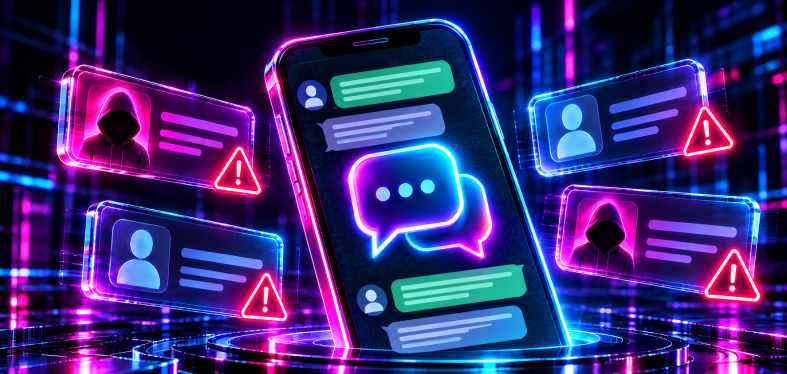
Online threat takedown is the process of finding, validating, and removing harmful digital content or infrastructure that abuses a brand. A strong takedown program combines monitoring, evidence, legal review, platform enforcement, and follow-up to reduce customer and business risk.
In 2026, brands face threats across websites, domains, marketplaces, social media, mobile apps, and paid ads. Therefore, online threat takedown has become an ongoing part of digital risk and brand protection rather than a one-time legal response.
Key Takeaways
- Online threat takedown combines detection, validation, evidence collection, enforcement, and follow-up.
- Threats can appear across websites, domains, marketplaces, social media, ads, apps, and other digital channels.
- WIPO managed more than 6,200 domain-name cases in 2025, its highest annual caseload on record.
- The FTC reported $3.5 billion in imposter-scam losses during 2025.
- FBI IC3 recorded 191,561 phishing and spoofing complaints in 2025.
- Each platform has its own rules, evidence needs, and reporting process.
- Strong takedown programs focus on high-risk threats and track whether abuse returns after removal.
Table of Contents
- Understanding the Online Threat Landscape
- Common Types of Online Brand Threats
- What Is the Online Threat Takedown Process?
- How Does Monitoring Support Threat Takedown?
- How Does Brand Infringement Removal Work?
- Why Does Platform-Specific Enforcement Matter?
- How Are Fake Domains Taken Down?
- How Do Domain Monitoring and Legal Action Work Together?
- What Role Do IP Law and Compliance Play?
- Why Should Legal and Compliance Teams Collaborate?
- What Is the Role of Digital Compliance?
- Why Do Reporting and Audit Readiness Matter?
- Why Does Enforcement Require Expertise?
- How Can Brands Scale Online Threat Takedown?
- Common Enforcement Challenges to Avoid
- Conclusion
- Online Threat Takedown FAQ
What Does the Online Threat Landscape Look Like in 2026?
Brands now face digital abuse across domains, websites, marketplaces, social media, mobile apps, paid ads, and other external channels. Therefore, protecting a brand requires ongoing monitoring rather than occasional searches.
Digital platforms create major opportunities for companies. However, they also give bad actors more places to misuse trusted brands.
For example, attackers can create fake websites, sell counterfeit goods, open impersonating social accounts, or register deceptive domains. In addition, the same campaign may use several of these channels at once.
Recent data shows how large parts of this problem have become.
According to the World Intellectual Property Organization’s 2025 domain-name dispute update, WIPO managed more than 6,200 domain-name cases in 2025. That was its highest annual caseload on record. Meanwhile, the Federal Trade Commission reported $3.5 billion in imposter-scam losses in 2025. Nearly one in three fraud reports involved impersonation.
Therefore, legal and compliance teams need to understand both the threat and the process for acting against it.
What Types of Online Threats Can Require Takedown?
Common threats include trademark infringement, counterfeit sales, fake websites, phishing, impersonation, deceptive domains, fraudulent ads, and rogue digital content.
However, not every finding requires the same response. Legal rights, customer impact, platform rules, and evidence all affect the correct enforcement path.
Common threats include:
- Counterfeit listings: Fake goods presented as genuine products.
- Phishing websites: Sites that copy a brand to steal credentials or payments.
- Brand impersonation: Fake accounts or pages that pose as a company.
- Executive impersonation: Fraudulent profiles or messages that copy a senior employee.
- Cybersquatting: Domains registered to misuse or imitate a trademark.
- Fake advertisements: Ads that misuse a brand to send users to fraudulent content.
- Copyright infringement: Unauthorized use of product images, videos, text, or other protected content.
- Rogue applications: Mobile apps that copy a brand or pretend to be official.
For example, a counterfeit seller may advertise through social media and send customers to a fake store. Therefore, an effective online threat takedown program should look beyond individual assets when possible.
Learn more about BrandShield’s Online Brand Protection approach and Online Counterfeit Protection.
What Is the Online Threat Takedown Process?
The online threat takedown process involves detecting a threat, validating the violation, collecting evidence, selecting the right enforcement route, submitting the complaint, and tracking the outcome.
The exact process depends on the type of abuse. However, most cases follow a similar framework.
- Detect the threat: Find suspicious websites, accounts, listings, ads, apps, or domains.
- Validate the violation: Confirm that the activity breaks a legal right, platform rule, or other relevant policy.
- Collect evidence: Record URLs, screenshots, timestamps, account details, and proof of rights.
- Choose the enforcement route: Identify the platform, host, registrar, marketplace, or other provider that can act.
- Submit the claim: Follow the provider’s reporting process and provide the required evidence.
- Track the outcome: Monitor whether the content disappears, the claim fails, or more action is needed.
- Watch for recurrence: Check whether the same actor or campaign returns on another channel.
Therefore, successful online threat takedown requires more than simply sending a complaint. Teams need accurate evidence and a clear enforcement path.
How Does Monitoring Support Online Threat Takedown?
Monitoring helps brands find threats early so enforcement can start before abuse reaches more customers. It also helps teams identify patterns across several digital channels.
The first stage involves monitoring the places where a brand is most likely to face abuse.
For example, detection may cover domains, websites, social media, marketplaces, mobile apps, and paid ads. Once a system finds a possible threat, teams should review it before taking action.
This step matters because not every brand mention is an infringement. Therefore, validation helps reduce weak complaints and false claims.
FBI data shows why phishing remains important. According to the FBI’s 2025 Internet Crime Report, IC3 received 191,561 phishing and spoofing complaints in 2025.
In addition, IC3 received more than 1 million total internet-crime complaints in 2025.
BrandShield’s AI.ClusterX threat clustering can also help teams identify links between separate digital threats.
How Does Brand Infringement Removal Work?
Brand infringement removal uses legal rights and platform policies to seek removal of unauthorized trademarks, logos, products, images, or other protected assets.
For example, infringement can appear in counterfeit listings, fake advertisements, social profiles, or fraudulent websites.
However, the correct action depends on the type of rights involved. A trademark claim may require different evidence from a copyright complaint.
Therefore, teams should confirm both the violation and the most suitable reporting method before they act.
Why Does Platform-Specific Enforcement Matter?
Every major platform has its own rules, evidence needs, forms, and escalation routes. Therefore, an enforcement method that works on one platform may fail on another.
Marketplaces, social networks, search engines, app stores, registrars, and hosting providers often use different processes.
For example, a marketplace may ask for trademark registration details and product evidence. Meanwhile, a registrar may need information about domain abuse and bad-faith use.
As a result, platform knowledge can improve the quality of an online threat takedown request and reduce avoidable delays.
How Are Fake Domains Taken Down?
Fake-domain enforcement starts by identifying the domain, confirming abusive use, preserving evidence, and choosing the right registrar, host, platform, or legal process.
Fake domains may copy a brand’s name, alter a few characters, or add terms that make the site appear official.
For example, attackers may use these domains for phishing, counterfeit stores, fake customer support, or malware.
WIPO’s record 2025 caseload shows the continuing importance of domain-name enforcement. WIPO managed more than 6,200 domain-name disputes in 2025.
Therefore, domain enforcement remains an important part of online threat takedown.
How Do Domain Monitoring and Legal Action Work Together?
Domain monitoring finds suspicious registrations, while legal review helps determine whether the domain justifies enforcement.
For example, teams can watch for new domains that closely resemble a protected brand or product name.
However, registration alone does not always prove abuse. Teams should also review how the domain is being used.
Once legal or enforcement teams confirm harmful use, they may contact a hosting provider, registrar, or other service. In some cases, formal domain-dispute action may also apply.
For more information, see the WIPO resources on domain-name disputes.
What Role Do IP Law and Compliance Play in Takedowns?
Intellectual property rights provide the legal basis for many takedown claims, while compliance helps ensure that enforcement follows the correct law and platform procedure.
Trademark, copyright, and domain rules can each support different forms of enforcement.
For example, trademark law may apply when a fake website uses a protected brand name to confuse consumers. Copyright law may apply when a scammer copies original images or content.
The U.S. Patent and Trademark Office provides information on U.S. trademark laws and regulations.
Therefore, legal review can strengthen an online threat takedown claim and reduce the risk of overreach.
Why Should Legal and Compliance Teams Collaborate?
Legal and compliance teams help validate rights, approve escalation, preserve evidence, and create consistent rules for enforcement.
However, online abuse rarely belongs to one function alone.
For example, security may find a phishing site. Marketing may find a fake advertisement. Customer support may receive a complaint about an impersonating profile.
Therefore, teams need a shared process for routing threats and deciding what happens next.
A clear workflow also helps prevent duplicated work. In addition, it gives the company a more consistent record of its enforcement decisions.
What Is the Role of Digital Compliance?
Digital compliance helps ensure that takedown activity follows legal, ethical, and platform-specific standards.
A strong enforcement program should protect brands without making unsupported claims.
Therefore, teams should use accurate evidence, identify the correct legal basis, and follow each platform’s rules.
As a result, compliance can strengthen long-term relationships with marketplaces, platforms, registrars, and other service providers.
Why Do Reporting and Audit Readiness Matter?
Reporting gives legal and compliance teams a record of what they detected, what they enforced, and what happened after each action.
Useful metrics can include:
- Number of validated threats
- Threat type
- Channel or platform
- Enforcement actions submitted
- Removal or takedown outcomes
- Time to action
- Time to removal
- Rejected claims
- Repeat offenders
- Recurring threats after takedown
Therefore, reporting makes an online threat takedown program easier to audit and improve over time.
However, teams should avoid relying only on raw alert counts. A small number of high-risk threats can matter more than hundreds of low-risk findings.
Why Does Online Threat Takedown Require Expertise?
Takedown work requires knowledge of platform rules, intellectual property rights, evidence standards, escalation routes, and the way digital threats change over time.
Platforms can change policies. Meanwhile, threat actors can move from one website, account, seller profile, or domain to another.
Therefore, effective enforcement often requires both technology and human judgment.
BrandShield combines AI-powered technology with expert review and enforcement workflows to help manage threats at scale.
For example, technology can surface suspicious assets across large digital environments. Human analysts can then review findings, validate risk, and support the correct response.
How Can Brands Scale Online Threat Takedown?
Brands can scale online threat takedown by combining automated monitoring, risk-based prioritization, standard evidence collection, repeatable enforcement, and ongoing reporting.
A reactive process often begins after a customer or employee finds a threat. However, this approach becomes difficult as threat volume grows.
Therefore, scalable programs should build a repeatable workflow:
- Monitor relevant external channels.
- Identify suspicious assets.
- Validate infringement or abuse.
- Prioritize high-risk threats.
- Collect consistent evidence.
- Submit the correct enforcement action.
- Track the outcome.
- Monitor for repeat abuse.
In addition, teams should look for links between separate findings. One operator may control several domains, profiles, ads, or listings.
As a result, connected enforcement can address a broader campaign rather than one asset at a time.
What Online Threat Takedown Challenges Should Brands Avoid?
The most common problems include slow action, poor evidence, weak prioritization, limited platform knowledge, and failure to monitor for repeat abuse.
- Slow enforcement: Delays give threats more time to reach customers. Therefore, teams should prioritize active fraud and high-risk abuse.
- Inconsistent documentation: Missing URLs, screenshots, timestamps, or rights information can weaken a complaint.
- Lack of platform knowledge: Using the wrong reporting route can lead to rejection or delay.
- Alert overload: Treating every finding as urgent can waste legal and enforcement resources.
- No recurrence monitoring: Removing one asset does not stop the same actor from returning elsewhere.
- Fragmented ownership: Legal, security, marketing, and eCommerce teams may act differently without shared rules.
Therefore, a mature online threat takedown strategy needs clear ownership and consistent operating standards.
Why Is Online Threat Takedown Important in 2026?
Online threat takedown is important because digital abuse can harm customers, intellectual property, revenue, and trust before a company can respond through traditional legal channels.
The threat landscape continues to expand. For example, WIPO handled its highest-ever annual domain dispute caseload in 2025. The FBI also recorded 191,561 phishing and spoofing complaints that year.
Meanwhile, the FTC reported $3.5 billion in 2025 losses from imposter scams.
These figures cover different forms of abuse. However, they all point to the same challenge: criminals can exploit trusted identities across digital channels at significant scale.
Therefore, brands need a process that connects detection with action.
A strong online threat takedown program combines monitoring, validation, evidence, legal review, platform-specific enforcement, and reporting. In addition, it tracks whether threats return after removal.
BrandShield helps organizations move from isolated takedowns toward more scalable digital risk protection. Its approach combines technology, expert analysis, and enforcement workflows across external digital channels.
As a result, legal and compliance professionals can focus on the threats that matter most while maintaining clear oversight of enforcement activity.
Online Threat Takedown FAQ
What Is Online Threat Takedown?
Online threat takedown is the process of identifying, validating, and removing digital threats that violate brand rights, platform rules, or other legal protections.
For example, it may involve phishing websites, counterfeit listings, fake profiles, deceptive domains, fraudulent ads, or other online brand abuse.
How Long Does an Online Threat Takedown Take?
Takedown times vary by platform, provider, type of threat, quality of evidence, and the enforcement route used.
Therefore, companies should avoid assuming that every threat will disappear within the same timeframe. Instead, they should track both internal response time and final removal time.
Are Fake Domains Illegal?
A fake or lookalike domain may support legal action when it infringes rights, creates consumer confusion, enables fraud, or meets the requirements of a domain-dispute process.
However, each case depends on the facts. Therefore, legal teams should review the domain, its use, and the applicable rights before taking action.
Why Is Compliance Important in Online Threat Takedown?
Compliance helps ensure that enforcement claims rely on valid rights, accurate evidence, and the correct platform or legal procedure.
As a result, brands can reduce unsupported complaints and maintain a more consistent enforcement process.
Can Online Threat Takedown Scale Globally?
Yes. Organizations can scale takedown activity by combining broad monitoring, standardized evidence, clear prioritization, platform knowledge, automation, and expert review.
However, laws and platform procedures can vary by market. Therefore, global programs still need the right legal and operational context.
What Evidence Is Needed for a Takedown?
Useful evidence often includes the URL, screenshots, timestamps, account or seller information, proof of brand rights, and details explaining the violation.
However, exact requirements vary by platform and threat type. Therefore, teams should collect evidence in a consistent format before submitting a complaint.
What Happens After a Threat Is Removed?
Teams should record the outcome and continue monitoring for the same actor, domain pattern, seller, content, or campaign.
For example, a removed counterfeit seller may return with a new account. Therefore, recurrence monitoring is an important part of online threat takedown.