Skip to content


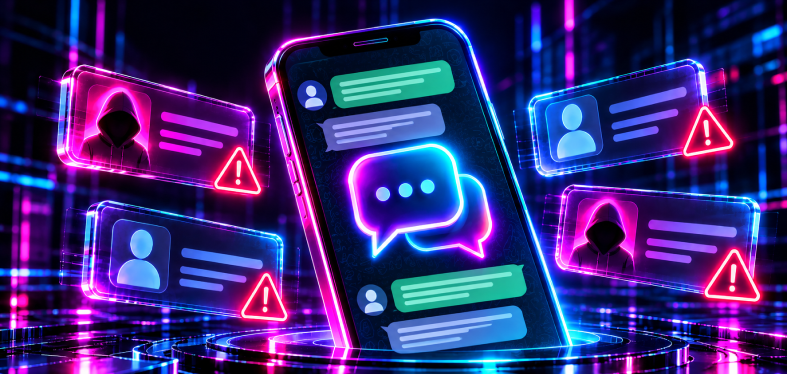
A message arrives from a senior leader. The name is right. The profile photo is right. The request sounds urgent and confidential. The problem is that the executive never sent it.
That pattern is becoming harder to dismiss as a simple fake-email problem. Criminals can now combine social profiles, lookalike domains, cloned websites, messaging apps, AI-generated voices, and convincing company information to make a leadership scam feel like a normal business request.
CEO Fraud is a form of impersonation and social engineering in which an attacker pretends to be a CEO or other senior leader to persuade someone to send money, disclose information, approve access, or follow fraudulent instructions.
The financial stakes are significant. According to the FBI’s 2025 Internet Crime Report, business email compromise generated about $3 billion in reported losses during 2025. The FBI also recorded more than 22,000 complaints involving AI-related information, with reported losses above $893 million.
Key takeaways
- CEO Fraud increasingly extends beyond email into social media, messaging apps, voice cloning, fake domains, and cloned websites.
- Attackers often build trust before asking for money, credentials, or sensitive information.
- AI can make fake profiles, messages, and voices more convincing, but the underlying scam still relies on manipulating normal business processes.
- Internal verification controls and external impersonation monitoring need to work together.
- Removing one fake account is not enough when the attacker controls several connected assets.
What is CEO Fraud?
CEO Fraud is an impersonation attack that uses the identity and authority of a senior leader to manipulate another person. The target may be an employee, vendor, customer, job candidate, investor, or business partner.
The classic version involves a fraudulent email asking finance to make an urgent wire transfer. However, modern CEO Fraud can start almost anywhere. An attacker may first create a fake LinkedIn profile, send a WhatsApp message, register a lookalike domain, or use an AI-generated voice message that sounds like the executive.
The objective also varies. Money is common, but attackers may seek:
- Login credentials
- MFA codes
- Payroll or tax information
- Customer data
- Confidential documents
- Vendor payment changes
- Access to SaaS accounts
- Cryptocurrency transfers
- Introductions to other employees
CEO Fraud therefore sits at the intersection of executive impersonation, phishing, business email compromise, and social engineering.
The attacker is borrowing authority. That is what makes the request work.
How does CEO Fraud work?
Most CEO Fraud attacks work by combining a believable identity, business context, urgency, and a request that appears plausible for the executive being impersonated. The attacker may spend time preparing the deception before making the final request.
A typical attack can unfold in several stages:
- Research the leadership team. Attackers collect executive names, photographs, job titles, company announcements, employee relationships, travel information, and other public details.
- Create the impersonation. They may build a fake social profile, spoof a display name, register a lookalike domain, or create another identity that resembles the executive.
- Establish trust. The attacker contacts an employee or partner and starts with a believable conversation rather than immediately requesting money.
- Move the conversation. The target may be asked to switch to WhatsApp, Signal, SMS, or another channel.
- Introduce urgency. A confidential acquisition, legal issue, invoice, vendor payment, or executive request creates pressure to act quickly.
- Complete the fraud. The victim sends money, shares credentials, changes payment information, or approves another action.
This matters because the visible fraud may be only the final stage.
The fake executive profile could have existed for weeks. The lookalike domain may already host a cloned login page. A second fake identity may pose as legal counsel or a supplier. Each asset reinforces the others.
What are Leadership Scams?
Leadership Scams are fraud schemes that exploit the identity, authority, reputation, or public profile of a company’s executives. CEO Fraud is one form, but attackers can impersonate CFOs, founders, board members, HR leaders, legal executives, and other senior figures.
The common factor is authority. Employees make different decisions when they believe the instruction comes from someone senior.
For example, a fake CFO might ask accounts payable to update a supplier’s banking details. A fake CEO could contact an employee through LinkedIn and move the conversation to WhatsApp. A fake HR leader could send a document that leads to a credential-harvesting site.
Leadership Scams also extend outside the company. Customers, investors, vendors, and job candidates may trust a fraudulent profile because the executive is publicly associated with the real organization.
That is why executive identity has become part of the external attack surface.
Why is CEO Fraud becoming more convincing?
AI is lowering the effort required to produce convincing content, but technology is only part of the story.
The FBI warned in 2025 about malicious actors impersonating senior U.S. officials using text messages and AI-generated voice messages. Attackers used the impersonated identity to establish rapport before attempting to gain access to accounts or move targets onto another messaging platform.
The FBI’s advice is direct: do not assume a message is authentic because it appears to come from a senior official.
AI can help attackers produce:
- More natural phishing messages
- Executive-style writing
- Fake profile images
- Synthetic voice recordings
- Translated content
- Personalized messages at scale
- Cloned websites and landing pages
According to the FBI’s 2025 Internet Crime Report, businesses reported more than $30 million in losses from business email compromise scams that involved an AI component.
Still, the mistake is assuming AI is the attack.
The attack is the manipulation of trust.
AI simply gives the scammer more convincing material to work with.
What does a modern CEO Fraud attack look like?
Consider a finance employee who receives a LinkedIn message from someone using the CEO’s name, photograph, title, and company information.
The conversation is professional. Nothing is requested at first. Later, the supposed CEO asks to continue on WhatsApp because the matter is confidential.
A second person then enters the conversation and claims to represent outside legal counsel. That person sends an invoice from a domain that differs from the real legal firm’s domain by one character.
The payment request looks more credible because several parts of the story support each other.
This is a hypothetical example, but every component reflects techniques documented in executive impersonation and business email compromise campaigns.
The employee is no longer evaluating one suspicious email. They are evaluating an apparently connected business process.
That is why a policy telling employees to “watch for phishing emails” is not enough.
A real example: executive impersonation around The Sandbox
BrandShield has seen this problem extend across several channels in real customer environments.
In one published BrandShield case, The Sandbox faced a surge in phishing websites and domains, fake social media profiles impersonating company executives, fraudulent mobile apps, and emails linking users to fraudulent content.
The important point is the combination.
The threat did not live on one platform. Executive impersonation, phishing, mobile apps, domains, and social media all contributed to the wider risk.
Sébastien Borget, COO and Co-Founder of The Sandbox, described proactive detection and takedown as a necessity rather than an optional response.
This is the pattern BrandShield teams are built to address: the executive profile is often only one asset inside a larger impersonation campaign.
BrandShield insight: leadership fraud is usually a campaign problem
The mistake we see most often is treating the fake executive account as the entire incident.
Removing that account is useful. However, the same attacker may also control a lookalike domain, cloned website, fake support account, fraudulent ad, or second profile.
BrandShield’s approach is to look for relationships between those assets rather than reviewing every finding in isolation.
Its AI.ClusterX technology is designed to identify connected threats and help reveal wider fraud networks. That can turn one executive impersonation finding into a broader investigation.
For example, an analyst may start with a fake profile and then find domains or websites using similar branding, contact details, imagery, or other shared signals.
One profile can be a clue to a much larger operation.
How can you detect CEO Fraud before money is sent?
Detecting CEO Fraud requires both internal verification and external visibility. Your organization needs controls that challenge unusual requests, but you also need to know when attackers are building fake identities and infrastructure outside your network.
1. Verify unusual requests through a separate channel
If a senior executive asks for money, credentials, confidential data, or a payment change, verify the request independently.
Do not reply to the same message. Call the executive using a known phone number or follow an established approval process.
2. Treat channel changes as a signal
Moving from email or LinkedIn to WhatsApp, Telegram, SMS, or another private channel is not automatically malicious.
However, an unexpected channel change combined with secrecy or urgency deserves scrutiny.
3. Examine domains closely
Attackers may register domains that differ from legitimate company or partner domains by only one letter.
Watch for added words, missing characters, different domain extensions, and subtle spelling changes.
BrandShield’s Online Phishing Protection is designed to identify phishing sites, lookalike domains, and other external threats that impersonate trusted organizations.
4. Monitor executive identities externally
Do not assume employees will always be the first people to notice a fake account.
Monitor social platforms, websites, domains, paid ads, messaging channels, and other external environments where executives can be impersonated.
5. Use strong payment controls
No executive should be able to bypass established payment verification simply by using urgency or confidentiality.
Require independent approval for new bank accounts, changed supplier details, unusual transfers, and high-risk payments.
6. Protect authentication workflows
Phishing-resistant MFA, conditional access, identity monitoring, and strong help-desk verification make it harder for attackers to turn an impersonation attempt into account access.
BrandShield insight: prioritize the threat that can cause harm now
Another common mistake is treating every suspicious asset with the same urgency.
A newly registered domain with no active content may deserve monitoring. An active cloned executive profile directing finance employees to a credential-harvesting website deserves immediate attention.
BrandShield uses a Critical Risks First approach to help prioritize threats according to their likely impact.
This becomes important at scale.
Large organizations may have thousands of brand mentions, domains, social accounts, and other findings. Your team needs to know which ones are actively threatening customers or employees.
Detection volume is not the outcome.
Risk reduction is.
How does phishing connect to CEO Fraud?
Phishing often provides the mechanism that turns leadership impersonation into account compromise or financial loss. The executive identity establishes trust, while the phishing site captures the information the attacker needs.
A CEO Fraud campaign might direct an employee to:
- A cloned Microsoft 365 login
- A fake document portal
- A fraudulent invoice page
- A fake company VPN login
- A credential-harvesting website
Attackers can now create those sites more quickly with AI-assisted tools. BrandShield examined this problem in its article on AI phishing sites and how scammers clone brands.
That is why executive impersonation and phishing should not sit in separate operational silos.
The profile, domain, website, and message may all belong to one campaign.
What should you do if someone impersonates your CEO?
Act on both sides of the incident: protect the people being targeted and remove the external infrastructure supporting the scam.
- Preserve evidence. Save screenshots, profile URLs, domains, email headers, phone numbers, messages, payment instructions, and timestamps.
- Warn likely targets. Alert finance, legal, HR, executive assistants, customer support, and other relevant teams.
- Secure affected accounts. Reset credentials and revoke sessions if anyone interacted with a phishing page or shared authentication information.
- Contact financial institutions quickly. If money was transferred, immediate action may improve the chance of stopping or recovering the payment.
- Report the fraudulent asset. Submit impersonation, phishing, or fraud reports to the platform, registrar, host, ad network, or other provider involved.
- Look for connected assets. Search for related profiles, domains, websites, ads, apps, and accounts.
- Monitor for reappearance. Attackers may replace a removed account or domain with another asset.
The FTC also recommends independently verifying unexpected requests rather than trusting contact information provided by the suspected impersonator.
In 2025, the FTC received more than one million reports about imposter scams. Consumers reported about $3.5 billion in losses.
Business impersonation alone accounted for nearly $1 billion in reported losses, according to the FTC’s June 2026 data release.
“The FTC will use every tool available to combat one of the most pernicious forms of fraud,” said Christopher Mufarrige, Director of the FTC Bureau of Consumer Protection.
BrandShield insight: takedown should target the operation, not one asset
Removing an impersonating profile matters. But stopping there can leave the rest of the scam untouched.
If the same operation also uses a phishing domain, fake website, social accounts, ads, or mobile apps, those assets need investigation too.
BrandShield combines AI-powered monitoring, threat clustering, expert investigation, and managed enforcement across external channels.
The company reports a 98% takedown success rate across its managed enforcement activity.
That does not mean every type of asset disappears at the same speed. Platforms, registrars, hosts, jurisdictions, and evidence requirements differ.
However, the operating principle is important: detection should lead to action.
BrandShield’s broader Online Brand Protection platform helps organizations investigate impersonation, phishing, fraudulent ads, fake accounts, rogue apps, and other forms of external brand abuse.
How can companies prevent Leadership Scams?
Companies reduce Leadership Scams by making executive identity harder to abuse and unusual requests harder to approve without verification. No single control stops every attack.
The strongest approach combines people, process, identity security, and external monitoring.
- Document payment verification. Define exactly how banking changes and high-risk transfers must be approved.
- Create an executive impersonation response plan. Decide who owns detection, escalation, communications, and takedowns.
- Train high-risk teams. Finance, HR, executive assistants, legal, procurement, and support teams often receive the most believable requests.
- Reduce unnecessary public detail. Review what executive schedules, organizational relationships, phone numbers, and travel information are publicly exposed.
- Use phishing-resistant authentication. Strong identity controls reduce the damage if an employee engages with a phishing lure.
- Monitor for fake executives. Search externally for profiles, domains, sites, ads, and other identities using executive names and imagery.
- Connect related threats. Investigate whether separate assets belong to the same operator.
- Measure enforcement outcomes. Track removals, recurrence, response time, and repeated infrastructure rather than alert counts alone.
The mistake we see most often is relying too heavily on employee awareness.
Training matters, but the employee should not be your only detection system.
If a fake executive profile, cloned site, and lookalike domain have been active for days, your organization should aim to find them before an employee receives the final request.
CEO Fraud FAQ
What is CEO Fraud?
CEO Fraud is a social-engineering scam in which an attacker impersonates a CEO or senior executive to persuade someone to send money, share information, approve access, or take another fraudulent action. It can involve email, social media, messaging apps, fake domains, websites, and AI-generated voices.
Is CEO Fraud the same as business email compromise?
No. They overlap, but they are not identical. Business email compromise often uses compromised or spoofed email accounts, while CEO Fraud can also use fake social profiles, messaging apps, voice cloning, lookalike domains, or other channels.
Can AI be used for CEO Fraud?
Yes. The FBI has documented AI-generated voice messages being used in impersonation campaigns. AI can also help attackers create realistic messages, profiles, images, and phishing content, although many CEO Fraud attacks still use traditional social-engineering methods.
How can you tell if a CEO message is fake?
Look for unusual urgency, secrecy, payment requests, changes in communication channels, unfamiliar numbers, subtle domain differences, and requests that bypass normal procedures. Verify sensitive instructions through a separate, known communication channel.
How can BrandShield help with CEO Fraud?
BrandShield monitors external channels for impersonation, phishing sites, lookalike domains, fake profiles, fraudulent ads, and related threats. Its approach combines AI-powered detection, threat clustering, prioritization, human investigation, and managed enforcement to help identify and remove confirmed impersonation infrastructure.
Protect the identity attackers are trying to borrow
CEO Fraud works because senior leaders carry trust.
A familiar name, photograph, title, voice, or company domain can make an unusual request feel legitimate. When attackers combine those signals across several channels, the deception becomes much harder to judge in isolation.
Your internal controls therefore need to make unusual requests difficult to approve without verification.
At the same time, external monitoring should help you identify fake executive profiles, phishing infrastructure, lookalike domains, cloned sites, and other impersonation assets before they become part of a successful scam.
BrandShield helps organizations detect, prioritize, investigate, and remove executive and brand impersonation threats across the external web.
If leadership impersonation is becoming a recurring problem for your organization, talk to BrandShield or book a demo to see how connected threat detection and managed enforcement can fit into your protection program.