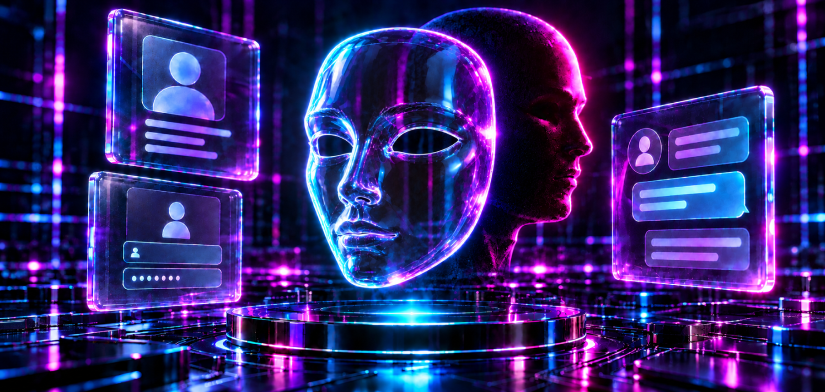

Cybersecurity journals are consistently reporting that social engineering has become faster, cheaper, and more pervasive.
The numbers back it up. CrowdStrike found that 82% of detections in 2025 were malware-free. In plain terms, attackers aren’t breaking in, they’re logging in, using stolen credentials and trusted identity flows. Attacks by AI enabled adversaries rose by a staggering 89%, and the year before, CrowdStrike saw access broker ads selling stolen credentials on the dark web jump by 50%. None of these threats require a vulnerability, they simply abuse trust in a person or a brand making phishing and impersonation increasingly effective ways to target organizations.
So, what does this mean for organizations preparing for 2027? Below are five phishing and impersonation patterns organizations should watch out for, plus an honest look at which ones external brand protection solutions like BrandShield can stop, and which ones need additional controls.
5 phishing and impersonation attack types to expect in 2027
1. Accounts payable fraud
Here’s a composite of how these play out. An attacker builds a Facebook profile for your CEO using public photos, a real bio, and a few dozen fake friends. With free AI tools, it takes minutes. They connect with a new AP clerk, chat for a week, then move to WhatsApp: a confidential acquisition is closing, a vendor needs an urgent wire, legal will send details. The “legal” email arrives from a lookalike domain registered two days earlier, with a spoofed invoice and new bank details.
No malware, no exploit. Just a believable executive, a believable domain, and an urgent deadline. The fake profile and the lookalike domain are both public, findable assets that existed before the wire went out.
2. Help desk impersonation that ends in SaaS data theft
Help desk fraud is an identity attack. The goal is a password or MFA reset that hands the attacker a working SSO account, and the chain usually runs in four steps.
Recon. First, attackers map your organization from the outside. LinkedIn tells them who works where, their job titles, and who reports to whom. Then they check what’s already leaked. When companies are breached, employee emails, passwords, and phone numbers end up for sale on the dark web. Match the two, and the attacker knows exactly who to pretend to be and has the answers to the help desk’s security questions. This is the playbook of Scattered Spider, a cybercrime group linked to attacks on MGM Resorts and Marks & Spencer.
Staging. Before any contact, they register domains built on your brand: yourcompany-sso.com, yourcompany-okta.com, yourcompany-helpdesk.com. CISA flagged precisely this pattern. Many of these domains live less than a week before they’re burned.
The ask. The attacker contacts the help desk as an employee locked out of MFA, or messages a real employee on Microsoft Teams posing as internal IT. With an employee ID, a manager’s name, and a leaked password in hand, verification questions are easy.
Persistence. Once in, they enroll their own MFA device, then use the SSO dashboard to reach Microsoft 365, cloud apps, VPN, or really anything else. In one documented intrusion, they searched SharePoint for help desk instructions and new hire guides to sharpen the next attempt.
The lookalike SSO and helpdesk domains exist before the first contact, and so do the leaked credentials. That’s the best opportunity to take down their attack infrastructure with continuous domain monitoring.
3. Device code phishing
Device codes exist so things such as smart TVs can sign in: the TV shows a short code, and you type it into a real login page on your phone to approve it. Attackers abuse this. They ask Microsoft for a code themselves, then send it to the victim inside a believable message, for instance, a Teams meeting invite that says “enter this meeting ID to join.” The link goes to Microsoft’s real domain. The victim enters the code, approves the login, and unknowingly hands access to the attacker.
In the Storm-2372 campaign, Microsoft saw hackers pose as important people on WhatsApp, Signal, and Teams, chat with the target to build trust, then send a fake invite with the device code posing as the meeting ID.
The Microsoft login can’t be spotted or taken down because it’s real. What can be detected and taken down is the infrastructure behind the setup. The whole scam depends on the victim trusting the sender. If that trust comes from a fake social media profile impersonating a company executive, or a lookalike domain abusing your company name to send emails, those can be detected and removed before the invite ever goes out.
4. ClickFix and fake CAPTCHA lures
You land on a page that looks broken: a meeting that won’t load, a browser error, or a CAPTCHA asking you to prove you’re human. The page gives you simple steps to fix it: press Windows + R, paste, hit Enter. What you often don’t see is that the page has already copied a hidden command to your clipboard. When you paste it and press Enter, you’re running that command yourself, and it quietly installs malware on your computer.
Because the employee does it with their own hands, there’s no suspicious attachment or link for an email filter or browser warning to catch. It’s a very deceptive and effective scam: CrowdStrike saw fake CAPTCHA incidents rise 563% in 2025, and in July 2026 caught North Korean hackers using a fake video meeting site this way against a financial services employee.
Stopping it requires two layers. External cybersecurity providers can find the fake meeting pages, copycat sites, and malicious paid ads that lure people in, and take them down. Endpoint protection covers what happens on the device itself, blocking suspicious commands the moment they run and limiting who can use tools like Microsoft PowerShell in the first place.
5. Adversary in the middle phishing on lookalike domains
Phishing kits, often sold on the dark web, have become very sophisticated. Tools like Evilginx proxy a real login, let the victim complete MFA, then steal the session cookie. These campaigns, like so many others, depend on brand impersonating domains, cloned login pages, and fake paid ads that funnel traffic to the malicious domain. Since the domains rotate fast, continuous domain monitoring is essential.
Where external brand protection fits, and where it doesn’t
Most of these attacks take advantage of assets that live outside your network and outside anything you directly own or control. Domains around the world, social media accounts, AI chatbots, your reputation: none of these are endpoints you can simply plug into your stack and wall off.
But solutions do exist. As an external cybersecurity provider, BrandShield detects and takes down fake executive profiles on social media, lookalike domains, cloned login pages, and fraudulent ads, through our expert Threat Hunters. If you remove the fake CEO profile or the lookalike domain early, accounts payable scams, help desk staging domains, and adversary-in-the-middle kits all lose their delivery mechanism.Dark web monitoring adds another layer of protection, uncovering leaked credentials and employee data that attackers may gather to prepare for an attack before it happens.
Other attacks need additional controls. Device code sign-in scams run on real Microsoft pages, so the main fix there is conditional access policies that block device code flow. Help desk fraud needs strict caller verification and strong MFA. ClickFix needs endpoint and browser controls, even after the lure sites impersonating your brand come down.
Your 2027 social engineering defense checklist
- Monitor social media for fake profiles of your s, and ideally all employees, and get them remediated fast.
- Continuously monitor new domain registrations, especially those that pair your brand with keywords including sso, okta, vpn, helpdesk, or login, and set up real time alerting.
- Scan for cloned login pages and fake customer portals carrying your logo.
- Track paid ads on Google and Meta that bid on your brand and send traffic to lookalike sites.
- Monitor the dark web for leaked employee credentials and company data.
- Require callback verification for every vendor bank detail change.
- Harden help desk identity checks and alerts on every new MFA device enrollment.
- Block device code authentication where you don’t need it.
- Restrict PowerShell and the Run dialog for standard users.
- Move high-risk roles to phishing-resistant MFA, such as passkeys or FIDO2.
The bottom line
The biggest social engineering threat going into 2027 isn’t malware. It’s identity attacks that are the biggest culprits of – abusing trust. Attackers impersonate a CEO on Facebook, LinkedIn, or WhatsApp to pressure finance teams into urgent wires. They trick employees into typing a device code on a real Microsoft page, handing over access without a password. And they use adversary-in-the-middle kits to steal session cookies right after MFA. This alone is evidence as to why MFA alone isn’t enough anymore.
Brand protection and External Cybersecurity won’t stop malware directly. Instead they identify and remove the fake profiles, domains, pages, and ads behind the scams. They are therefore an essential part of organizations’ cyber stack for 2027.