Skip to content


By Rachel Gerstler · Last updated: November 11, 2026
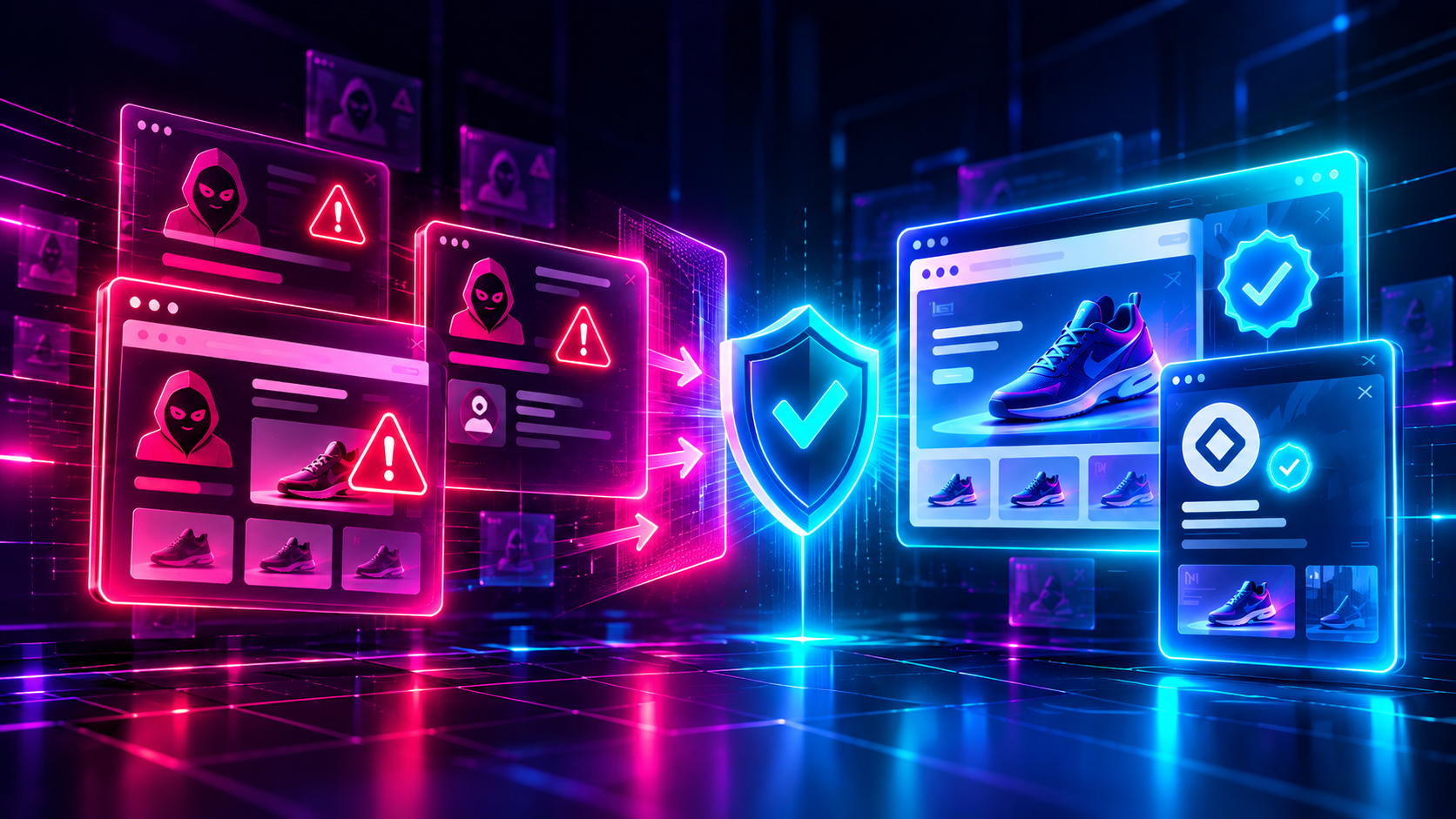
Holiday shopping creates ideal conditions for online brand abuse. Promotions become more aggressive, shoppers visit unfamiliar sites, and limited-time offers make unusual discounts feel more credible.
BrandShield’s enforcement data shows how sharply that activity can intensify. During Q4 2025, enforcement activity across websites, marketplaces, and social media increased approximately 70% compared with the average quarter during the first nine months of the year.
That does not mean online scams themselves increased by exactly 70%. It means BrandShield recorded 70% more enforcement activity during the period.
Beyond that increase, BrandShield investigations found suspicious domains using familiar logos, product imagery, discounts, and misleading domain names to attract shoppers.
Brand abuse is the unauthorized or deceptive use of a company’s name, trademarks, products, imagery, domains, or identity to mislead customers or benefit from the trust associated with that brand.
During the holiday season, those tactics can become harder for consumers to distinguish from legitimate promotions.
Key takeaways
- BrandShield enforcement activity increased 70% in Q4 2025 compared with the average quarter during Q1 to Q3.
- Social media recorded the sharpest proportional increase, rising 97%.
- Marketplace enforcement increased 68%, while website enforcement increased 64%.
- Holiday season brand abuse often uses discounts, familiar branding, lookalike domains, and cross-channel promotion.
- Brands should prioritize connected threats and enforcement outcomes rather than detection volume alone.
How Much Did Brand Abuse Increase During Q4?
BrandShield’s 2025 enforcement data shows that the seasonal increase appeared across every major channel analyzed.
The comparison below measures Q4 2025 enforcement activity against the average quarterly level during Q1 to Q3 2025.
| Channel | Q4 increase |
|---|---|
| Websites | +64% |
| Marketplaces | +68% |
| Social media | +97% |
| Paid Ads | +83% |
| Overall | +70% |
Source: BrandShield enforcement data, 2025. Percentages compare Q4 enforcement activity with the average quarterly level during Q1 to Q3.
Social media experienced the largest proportional increase, with activity rising 97%. Marketplace enforcement increased 68%, while website enforcement rose 64%.
The pattern matters because holiday-season brand abuse doesn’t stay within one channel.
A suspicious website may be promoted through social media. A counterfeit listing may use the same imagery as an independent store. A paid advertisement may direct shoppers to a lookalike domain.
For your team, that makes cross-channel visibility more important during high-volume shopping periods.
Why Does Holiday Season Brand Abuse Become Harder to Spot?
Holiday season brand abuse becomes more convincing because fraudulent operators can imitate behavior shoppers already expect from legitimate retailers.
Heavy discounts are normal. Countdown timers are normal. Flash sales are normal. Consumers also visit unfamiliar retailers because popular products sell out elsewhere.
Attackers do not need a completely new tactic. They need an existing tactic that looks normal in the context of holiday shopping.
That is where risk increases.
The mistake we see most often is treating the seasonal increase as simply a volume problem. The harder issue is that the same indicators your team might normally view as suspicious can become less obvious during Black Friday, Cyber Monday, Christmas, and end-of-year promotions.
How Are Popular Brands Exploited During the Holidays?
BrandShield investigated suspicious domains associated with major footwear, fashion, and consumer-electronics brands.
Several recurring patterns emerged.
1. Fake Stores That Look Ready for Business
One of the most convincing forms of brand abuse is a storefront designed to resemble a legitimate retailer.
BrandShield identified websites using HOKA branding, recognizable footwear, product photography, and familiar ecommerce layouts.
For example, hokaofficlel.com displayed HOKA footwear alongside discounts of 50%. Another domain, hokaoffcial.com, used a close variation of the word “official” together with HOKA products and pricing.
The spelling is important.
A shopper scanning a domain quickly may not notice the difference between “official” and a carefully constructed misspelling.

BrandShield identified a similar pattern in Nike-related domains. nikebargains.com displayed Nike branding and footwear promotions advertising discounts of up to 67%.

During a normal shopping period, a steep discount may trigger suspicion.
During a major seasonal promotion, it can look more believable.
That is what makes these sites dangerous for brands. The operator borrows trust that the legitimate company spent years building.
For companies dealing with this type of activity, Online Brand Protection needs to cover more than marketplace listings. Websites, domains, social media, and advertising can all contribute to the same customer journey.
2. Discounts and Urgency That Encourage Immediate Action
Legitimate holiday marketing relies heavily on urgency.
Flash sales, limited-time offers, countdowns, and prominent discounts encourage consumers to make decisions quickly.
Fraudulent operators can copy the same techniques.
BrandShield identified iphone17white.store promoting an Apple-branded product alongside a substantial claimed discount and a countdown timer.

The exact price matters less than the construction of the offer.
It combines three signals shoppers commonly associate with legitimate holiday promotions:
- A recognizable product
- A large discount
- A deadline
Another investigated domain, on-cloud-6.com, displayed On-branded footwear with a “Buy one pair. Get one free” promotion.
The problem is not that legitimate retailers use discounts.
The problem is that suspicious or unauthorized websites can use the same promotional language and brand assets to appear legitimate.
This is also why Paid Ad Scam Protection matters. A convincing fraudulent website becomes more dangerous when paid advertising, search, or social channels actively direct shoppers toward it.
3. When a Brand Name Leads Somewhere Completely Different
Not every suspicious domain attempts to recreate an ecommerce store.
BrandShield investigations also found recognizable brand names embedded in domains that led to unrelated content.
For example, burberryoutletsale-us.com suggested a Burberry outlet store but was captured displaying an unrelated online gambling promotion.
Similarly, iphone11.vip displayed casino and sportsbook content rather than Apple products.
These examples show why domain monitoring cannot focus only on exact copies of legitimate stores.
A brand name itself has value.
Operators can use it within a domain to attract attention, benefit from search behavior, create false association, or redirect visitors toward unrelated services.
If your monitoring focuses only on counterfeit marketplace listings or copied product pages, other forms of brand abuse can remain outside your field of view.
Why Cross-Channel Brand Abuse Matters in Q4
Holiday threats rarely respect channel boundaries.
A suspicious store may be promoted through social media. A fake promotion can appear through a paid advertisement. Similar imagery may surface across several marketplace accounts and domains.
Looking at those assets independently can hide the operation behind them.
For example:
Paid ad → suspicious domain → fake storefront → checkout
Or:
Social profile → seasonal promotion → lookalike website → payment request
The individual asset matters. However, the connection between assets can reveal more.
BrandShield uses AI.ClusterX™ to identify relationships between related threats and help analysts investigate broader networks rather than treating each domain, profile, listing, or ad as a separate incident.
This becomes especially valuable when activity rises sharply.
When social media enforcement increases 97%, simply adding more alerts to your queue does not solve the problem. Your team needs to identify which findings belong together and which create the greatest immediate risk.
What Should Brands Do About the Q4 Increase?
The seasonal data points to several practical priorities.
Monitor the promotions attackers are likely to copy
Your monitoring strategy should account for major product launches, seasonal discounts, Black Friday campaigns, Cyber Monday promotions, and other offers customers already associate with your brand.
Attackers often borrow the context around legitimate campaigns.
Look beyond exact brand matches
Suspicious domains may contain:
- Misspellings
- Brand-plus-product combinations
- Promotional words
- Terms such as outlet, sale, shop, secure, or official
- Different domain extensions
The asset does not need to copy your legitimate domain exactly to mislead someone.
Connect activity across channels
Websites, marketplaces, paid advertisements, social accounts, and domains should not always be investigated independently.
If several assets share imagery, offers, identities, contact information, or infrastructure, they may belong to the same operation.
Prioritize the threats most likely to harm customers
Not every infringement has equal urgency.
An active phishing page, fraudulent checkout experience, or campaign reaching shoppers should usually receive more attention than a lower-risk brand mention.
This is the thinking behind BrandShield’s Critical Risks First approach.
Measure enforcement outcomes
Detection counts alone are a weak measure of protection.
Track:
- Removal success rate
- Changes in enforcement activity
- Recurrence rates
- Channel-by-channel trends
- Percentage changes during peak periods
Percentage-based reporting can also make year-over-year and quarter-over-quarter changes easier for leadership teams to understand without exposing sensitive enforcement volumes.
How Should You Prepare for Holiday Season Brand Abuse?
Preparation should begin before seasonal campaigns reach their peak.
Your team already knows which products will receive the most marketing investment. You know the promotions customers will see and which channels will drive traffic.
Use that information in your brand-protection program.
Before a major campaign:
- Identify the products, promotions, and brand terms attackers are most likely to imitate.
- Expand monitoring around relevant domains, social platforms, marketplaces, and advertising channels.
- Define which types of threats require immediate enforcement.
- Make sure ecommerce, security, legal, and marketing teams know how to escalate suspicious findings.
- Track percentage changes in threat and enforcement activity as the season progresses.
This creates a more proactive workflow.
Instead of discovering a campaign after customer complaints appear, your team has already defined what to look for and how to respond.
How Does BrandShield Approach Holiday Brand Abuse?
BrandShield combines AI-powered detection, cross-channel monitoring, threat analysis, and managed enforcement to help brands identify and remove online threats.
Its Online Brand Protection platform monitors threats across websites, marketplaces, social media, paid ads, domains, mobile apps, and other external channels.
AI.ClusterX helps connect related assets into broader networks.
BrandShield also prioritizes critical risks so your team can focus on threats most likely to affect customers, revenue, or reputation.
The goal is not to maximize alert volume.
It is to find the threats that matter and act on them.
Holiday Brand Abuse FAQ
Does brand abuse increase during the holiday season?
BrandShield’s enforcement data indicates a clear seasonal increase. Overall enforcement activity during Q4 2025 was 70% higher than the average quarterly level during Q1 to Q3.
The increase appeared across websites, marketplaces, and social media rather than one isolated channel.
Which channel showed the largest Q4 increase?
Social media recorded the greatest proportional change in BrandShield’s data, with enforcement activity increasing 97% compared with the average quarter during Q1 to Q3.
Marketplace activity increased 68%, while website enforcement rose 64%.
Why are fake stores harder to identify during the holidays?
Holiday shoppers expect discounts, countdown timers, flash sales, and unfamiliar retailers.
Fraudulent operators can copy those normal seasonal signals. As a result, suspicious promotions may appear less unusual during peak shopping periods.
How can brands reduce holiday season brand abuse?
Brands should monitor the products and campaigns most likely to be copied, connect activity across channels, prioritize high-risk threats, and measure enforcement outcomes.
Continuous monitoring is also important because operators can replace removed domains, listings, and accounts.
Does holiday brand abuse stop after Q4?
No. The seasonal period can amplify existing tactics, but counterfeit selling, phishing, impersonation, and domain abuse continue throughout the year.
The better strategy is continuous monitoring with additional focus around high-risk commercial periods.
The Holiday Rush Ends. Brand Abuse Doesn’t.
BrandShield’s research points to two clear conclusions.
First, enforcement activity rises materially during Q4. Overall activity increased 70%, with social media showing the sharpest change at 97%.
Second, the abuse extends well beyond simple fake stores.
Suspicious domains can imitate retailers, use familiar promotions, direct customers toward unrelated content, or operate as part of larger campaigns across social media, advertising, marketplaces, and websites.
For your team, the priority should be proactive detection, connected investigation, risk-based enforcement, and continuous monitoring.
The goal is not simply to take down more scams during Q4.
It is to prevent a seasonal increase in fraudulent activity from becoming a seasonal increase in customer harm.