Skip to content


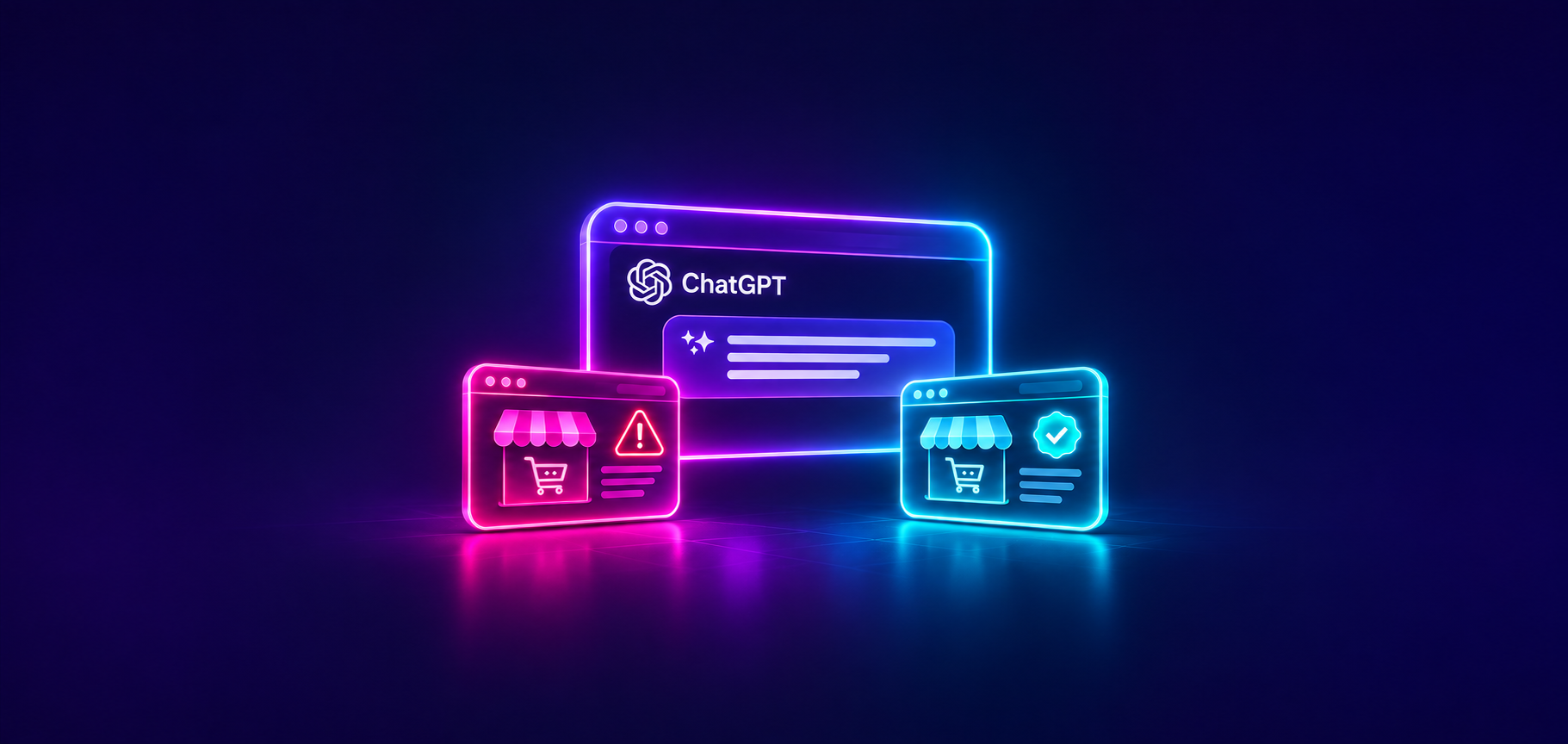

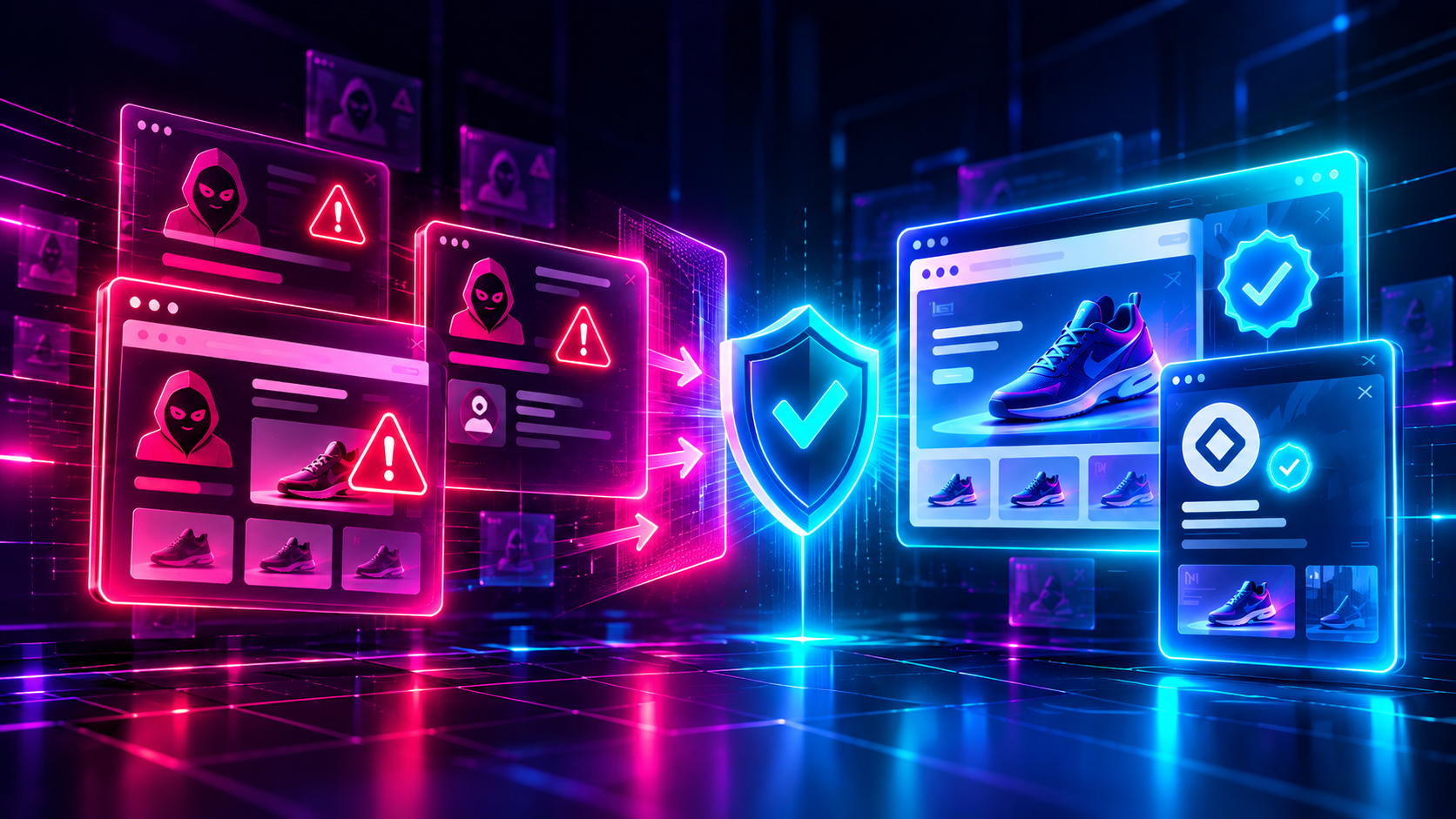
NordVPN recently uncovered a network of more than 10,000 fraudulent online stores impersonating 166 fashion and luxury brands across 26 countries. More importantly for brand teams, some of those sites did not stay buried in search results: Perplexity recommended two fraudulent stores, while ChatGPT and Gemini cited other websites connected to the same network.
That is why AI platform protection is becoming part of brand protection. Once a fake store appears inside an AI-generated answer, the threat is no longer only a search, domain, or counterfeit problem. It has gained another layer of visibility and perceived credibility.
Key takeaways
- Fake stores can now move from search visibility into AI-generated shopping recommendations.
- NordVPN found more than 10,000 fraudulent stores impersonating 166 brands across 26 countries.
- Perplexity recommended two stores from the network, while ChatGPT and Gemini cited other connected sites.
- AI visibility should be treated as a severity signal because it can expose fraudulent sources in a trusted discovery environment.
- Brands need to monitor both what AI platforms say and the external sources influencing those answers.
Why are fake stores appearing in AI answers?
Fake stores can appear in AI answers because AI assistants rely on information available across the open web. If a scam site gains enough search visibility, indexation, citations, or other signals, it can become part of the source material an AI system uses when answering a shopping query.
The NordVPN investigation shows this clearly. According to Money’s report on NordVPN Threat Intelligence research, the fraudulent stores were designed to resemble official local brand websites and were optimized to appear in Google search results.
NordVPN found more than 10,000 fraudulent stores across 26 countries. The sites impersonated 166 brands, including Adidas, Ralph Lauren, Dr. Martens, Crocs, and Birkenstock.
Marijus Briedis, Chief Technology Officer at NordVPN, described the approach simply: “Every one of these stores is designed to look exactly like the official brand website for your country.”
The sites used the right language, currency, local addresses, and familiar payment logos. That level of presentation matters because AI assistants are evaluating a web environment where fraudulent sites increasingly look professionally built.
What is AI platform protection?
AI platform protection is the monitoring of how a brand appears in generative AI answers and the external sources influencing those answers, so harmful, misleading, or infringing sources can be identified and addressed.
It is different from simply tracking brand mentions in ChatGPT or another assistant. The real question is not only what the AI says. It is where that answer came from.
If an AI assistant recommends a fake store, the underlying website remains the actionable threat. The answer is the signal that tells your team the source has gained a new level of exposure.
Your brand is already being surfaced inside AI-generated answers. BrandShield AI Platforms Protection detects harmful, misleading, and infringing content in AI responses and helps prevent it from influencing customer decisions.
Why AI shopping recommendations change the risk
Consumers increasingly use AI tools to research products and decide where to buy them. Adobe surveyed 5,000 U.S. consumers and found that 38% had already used generative AI for online shopping, while 52% planned to use it.
Adobe also reported that traffic from generative AI sources to U.S. retail sites had grown 4,700% year over year by July 2025. AI-driven shopping was still smaller than established channels, but the direction was clear.
For brand protection teams, this creates a different kind of exposure.
A fake store ranking in Google is already dangerous. A fake store being surfaced by an AI assistant adds an extra layer of implied validation.
The shopper may not have searched for the suspicious domain. They may have asked:
- Where can I buy this product?
- Is this store trustworthy?
- Where can I find the best price?
- Which retailers sell this brand?
- Where can I buy this product in my country?
If the answer includes a fraudulent source, the scam has entered a channel where the shopper may expect the assistant to have already filtered the options.
That makes AI visibility a severity signal.
What does this mean for brand protection teams?
The mistake is treating AI search as a separate reputation problem.
The NordVPN example shows that it is often the same brand abuse you already manage, simply appearing through another discovery layer. A fake store can rank organically, appear in search results, and then surface inside an AI answer.
For brand protection teams, that means domain monitoring and counterfeit detection need to connect with AI visibility.
If you already know that a domain is fraudulent, seeing it cited by ChatGPT, Gemini, Perplexity, or another AI platform should change its priority. The threat now has evidence of additional consumer exposure.
If the domain is new to your team, the AI answer may become the discovery signal that leads you to a wider campaign.
This is especially relevant for brands dealing with online brand protection across websites, marketplaces, social media, ads, and domains. The same operator may already be active in several of those environments.
The business impact goes beyond one fake store
For e-commerce and marketing leaders, the immediate concern is lost revenue. A consumer who believes a fake store is legitimate can complete a purchase outside your authorized channels.
But the impact can spread further.
A fraudulent store may collect payment details. It may sell counterfeit goods. It may never deliver a product at all. In each case, your brand identity helps create the trust needed to complete the scam.
AI recommendations can also interfere with your acquisition strategy. Your SEO, paid search, affiliate, marketplace, and ecommerce teams spend heavily to help customers find legitimate purchase paths. A fraudulent source that enters an AI answer can appear alongside those legitimate paths.
That creates a new question for digital marketing teams:
When customers ask AI where to buy from us, which sources are being recommended?
How should brands monitor AI platforms?
Start with the prompts customers are likely to use. Do not limit monitoring to your company name.
- Test purchase intent prompts. Ask where customers can buy your products, find discounts, locate regional stores, or compare sellers.
- Check the sources. Review the websites, marketplaces, social profiles, and other pages cited in AI answers.
- Validate unfamiliar sellers and domains. A polished website or AI citation does not make a source legitimate.
- Compare findings with existing threats. Determine whether a cited domain is already connected to phishing, counterfeiting, impersonation, paid ads, or social scams.
- Prioritize sources appearing in AI answers. Visibility inside an AI recommendation indicates additional exposure and should affect severity.
- Act on the underlying source. Investigate the website, marketplace listing, account, or domain behind the answer and pursue enforcement when appropriate.
- Monitor for recurrence. Removing one fake store does not stop an operator from launching another domain.
Marketing, ecommerce, security, and brand protection teams should share these findings. AI discovery crosses the boundaries between all four functions.
AI platform protection should focus on the source
Trying to manage only the wording of an AI answer misses the main problem.
The harmful website exists independently of ChatGPT, Gemini, Perplexity, or another assistant. It may already rank in Google, run paid ads, appear in social posts, or target consumers through other channels.
So the practical response is to investigate the source.
For example, if an AI assistant cites a suspicious store, your team should check the domain, ownership signals, site content, product imagery, payment flow, related social accounts, marketplace activity, and any connected infrastructure.
If the site is confirmed as fraudulent or infringing, enforcement should target the external asset itself.
This is also where phishing protection matters. Some fake stores exist to sell counterfeit products, while others are designed to collect credentials or payment information.
Where BrandShield fits
BrandShield’s approach to AI Platforms Protection starts with visibility into the AI platforms customers use, including ChatGPT, Gemini, Perplexity, and Grok.
The platform runs brand-specific prompts, reviews the answers, and analyzes the external sources associated with them. When a harmful source appears, BrandShield investigates the underlying website, marketplace, social profile, or other asset rather than treating the AI response as an isolated mention.
This also feeds BrandShield’s Critical Risks First approach. A fraudulent domain that appears in an AI answer has demonstrated additional exposure, so AI visibility becomes a signal for prioritization.
The important point is not that AI created the scam. In many cases, the scam already existed.
AI made the threat easier to discover and potentially easier to trust.
AI platforms protection FAQ
Can fake websites really appear in ChatGPT answers?
Yes. ChatGPT and Gemini cited websites connected to a network of fraudulent stores, while Perplexity directly recommended two fraudulent stores alongside legitimate retailers.
An AI citation does not prove that a website is legitimate.
Why would an AI assistant recommend a scam website?
AI assistants draw from information available across the web. A fraudulent website that gains search visibility or other signals can become part of the information environment used to generate an answer.
Professional design, local language, familiar payment logos, and strong search visibility can make fraudulent sources harder to distinguish automatically.
What should a brand do if a fake store appears in an AI answer?
Capture the answer and cited source, then investigate the underlying domain. Check whether it is connected to other fake stores, social profiles, ads, marketplace listings, or phishing infrastructure.
If the asset is enforceable, pursue removal at the source and continue monitoring for replacement domains.
Is AI platforms protection the same as AI reputation monitoring?
No. Reputation monitoring focuses mainly on what AI systems say about a brand.
AI platforms protection connects that visibility to digital risk by identifying harmful external sources, assessing their severity, and supporting action against the underlying threat.
AI platforms protection is becoming part of ecommerce security
The NordVPN investigation is an important warning for brand, marketing, and ecommerce teams.
Fake stores are no longer competing only for search rankings or paid traffic. They can now appear inside the AI tools customers use to research products, compare retailers, and decide where to buy.
That changes how brands should think about AI visibility.
A harmful source appearing in an AI answer is not simply a visibility issue. It is evidence that an external threat has entered another trusted consumer discovery channel.
AI platforms’ protection should therefore connect AI monitoring with the brand protection work already happening across domains, websites, marketplaces, social media, and paid ads.
The goal is straightforward: find the harmful source, understand how it connects to the wider threat, prioritize it based on real exposure, and act before more customers are directed toward it.