Skip to content




Enterprise brand monitoring is the process of continuously tracking how a company’s brand, trademarks, logos, domains, products, executives, and digital assets are being used across the internet. For global brands, this includes monitoring websites, marketplaces, social media, paid ads, app stores, search results, and dark web sources to detect phishing, impersonation, counterfeits, fake ads, rogue apps, and other forms of online brand abuse.
Enterprise brands have never had more digital exposure. Customers discover, research, and buy from brands across websites, marketplaces, social media, paid ads, mobile apps, search engines, and AI-driven platforms. Each touchpoint creates opportunity. It also creates risk.
Fake websites can impersonate your company. Counterfeit listings can appear on marketplaces. Fraudsters can create social media profiles that look like your brand or executives. Paid ads can hijack branded traffic. Rogue apps can abuse your name and logo. These threats often happen outside your owned channels, making them hard to detect without continuous monitoring.
That is why enterprise brand monitoring has become a critical part of digital risk protection. Large organizations need more than occasional searches or manual reviews. They need a scalable way to detect brand abuse globally, prioritize the most serious threats, and take action before customers, revenue, and reputation are damaged.
In this guide, we explain why enterprise brand monitoring matters in 2026, which threats need to be covered, and how AI-powered monitoring helps global brands respond faster.
What Is Enterprise Brand Monitoring?
Enterprise brand monitoring is the ongoing process of detecting unauthorized or harmful use of a brand across digital channels. It helps large organizations identify when their brand name, logo, trademarks, products, executives, or digital assets are being misused online.
Unlike basic brand monitoring, which may focus on mentions, sentiment, or social listening, enterprise brand monitoring is designed to detect risk. It looks for threats such as phishing sites, counterfeit products, fake social media profiles, unauthorized sellers, paid ad scams, rogue mobile apps, and impersonation campaigns.
Effective enterprise brand monitoring gives legal, security, marketing, eCommerce, and brand protection teams a shared view of external threats. It helps teams understand where abuse is happening, which cases matter most, and what action should be taken.
Why Enterprise Brand Monitoring Matters in 2026
The digital attack surface for enterprise brands has expanded quickly. A single brand can now appear across thousands of websites, seller pages, profiles, ads, listings, apps, and search results. Some are legitimate. Others are not.
Bad actors move fast. They can register lookalike domains, clone websites, copy logos, publish counterfeit listings, and create fake social accounts in minutes. Generative AI has made this easier by helping scammers produce convincing copy, images, ads, and impersonation content at scale.
The global counterfeit economy also remains large. OECD/EUIPO reported that global trade in counterfeit goods was valued at approximately $467 billion, equal to 2.3% of global imports. For enterprise brands, this is not only an IP issue. It is a customer trust, revenue, safety, and reputation issue.
Without continuous enterprise brand monitoring, threats are often discovered only after customers report scams, partners escalate concerns, or fake listings begin affecting sales. By then, the damage may already be spreading.
Enterprise Brand Monitoring vs. Social Listening
Many companies already monitor brand mentions online. But social listening and enterprise brand monitoring are not the same thing.
Social listening usually focuses on conversations, engagement, sentiment, and customer feedback. It helps marketing and communications teams understand how people talk about the brand.
Enterprise brand monitoring focuses on risk. It detects unauthorized use of brand assets, suspicious domains, fake listings, impersonation profiles, phishing pages, counterfeit products, paid ad abuse, and other external threats.
Both are useful, but they solve different problems. Social listening tells you what people are saying. Enterprise brand monitoring tells you where your brand is being abused and what needs to be removed.
External Threats Enterprise Brands Need to Monitor
Global enterprises face brand abuse across many digital channels. A strong enterprise brand monitoring program should cover the full external attack surface.
1. Websites and Domains
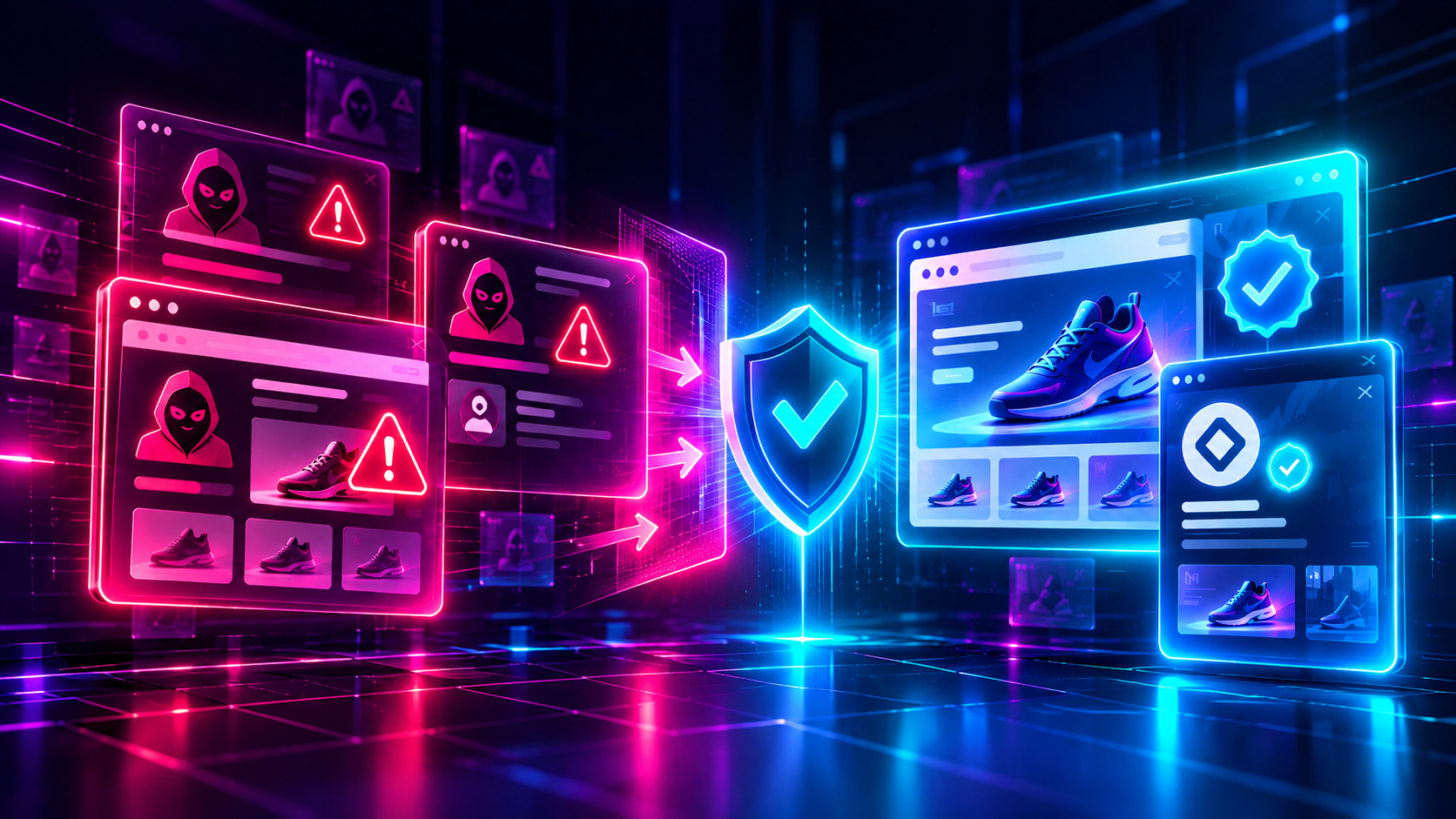
Fake websites, cloned landing pages, lookalike domains, typosquatting, and phishing pages are among the most common threats targeting enterprise brands. These sites can steal credentials, collect payment details, impersonate customer support, or redirect users to scams.
Learn how BrandShield helps detect phishing and fake websites.
2. Online Marketplaces
Counterfeit products, unauthorized sellers, grey market activity, copied product images, and trademark abuse often appear across major and regional marketplaces. Enterprise brands need visibility across platforms such as Amazon, eBay, Alibaba, AliExpress, Temu, Shopee, TikTok Shop, and other relevant marketplaces.
Explore BrandShield’s Marketplace Brand Protection solution.
3. Social Media and Messaging Platforms
Fake brand accounts, executive impersonation, fraudulent promotions, fake giveaways, customer support scams, and social commerce fraud can spread quickly across social platforms. Messaging apps and closed communities can also be used to distribute scam links or counterfeit products.
See how BrandShield helps detect social media scams.
4. Paid Ads and Search Results
Fraudsters can use paid ads to hijack branded traffic, promote fake stores, or direct customers to phishing pages. Search results can also surface scam websites, counterfeit sellers, or misleading content that damages trust before customers ever reach the official brand site.
Learn more about BrandShield’s Paid Ad Protection solution.
5. Mobile App Stores
Rogue apps can impersonate enterprise brands using similar names, logos, descriptions, and interface designs. These apps may mislead customers, collect personal data, or damage trust in the official brand experience.
Read about BrandShield’s Fake Mobile App Protection solution.
6. Dark Web Sources
Dark web monitoring can help surface exposed credentials, stolen data, brand-related criminal activity, counterfeit distribution signals, and early indicators of fraud. For enterprise organizations, this visibility can support security, risk, and incident response teams.
Explore BrandShield’s Dark Web Monitoring solution.
Why Global Brands Need Cross-Channel Monitoring
Brand abuse rarely stays in one place. A phishing campaign may begin with a lookalike domain, appear in search ads, spread through social media, and use fake support accounts to build trust. A counterfeit network may operate across several marketplaces, social stores, and cloned websites at the same time.
This is why enterprise brand monitoring must be cross-channel. Monitoring one marketplace or one social platform is not enough. Teams need to see how threats connect across domains, listings, profiles, ads, apps, and sellers.
Cross-channel monitoring helps answer important questions:
- Where is our brand being misused?
- Which platforms create the highest risk?
- Which threats are connected?
- Which cases should be enforced first?
- Are the same bad actors returning under new names?
- How quickly are threats being removed?
For enterprise organizations, these answers are essential. They help teams move from reactive enforcement to proactive digital risk management.
The Role of AI in Enterprise Brand Monitoring
AI has changed both sides of the brand protection problem. Threat actors use AI to create convincing fake websites, product descriptions, social profiles, ads, images, and impersonation content. This makes scams faster to launch and harder to detect manually.
At the same time, AI gives enterprise brands a way to scale monitoring and enforcement. AI-powered systems can scan large volumes of digital content, detect visual and text-based brand abuse, identify suspicious patterns, and prioritize the risks that matter most.
AI can support enterprise brand monitoring by helping teams:
- Detect logo misuse and trademark abuse across digital channels.
- Identify fake websites, phishing pages, and lookalike domains.
- Find counterfeit listings and unauthorized sellers.
- Detect fake social media profiles and impersonation attempts.
- Connect related threats across marketplaces, domains, ads, and profiles.
- Prioritize critical risks instead of reviewing every alert manually.
The value of AI is not only faster detection. It is better prioritization. Enterprise teams do not need more noise. They need clarity around which threats create the greatest risk to customers, revenue, and brand trust.
How Threat Clustering Improves Enterprise Brand Monitoring
One of the biggest challenges in enterprise brand monitoring is understanding whether separate threats are actually connected. A fake website, marketplace listing, paid ad, and social media account may appear unrelated at first. In reality, they may be part of the same scam network.
BrandShield’s AI.ClusterX threat clustering helps identify these connections. It groups related digital assets, detects similar patterns, and helps teams uncover coordinated abuse networks.
This matters because enterprise enforcement is more effective when teams can act against networks, not only individual incidents. Instead of removing one fake page or listing at a time, brands can identify related assets, prioritize high-impact clusters, and respond faster.
The Business Case for Enterprise Brand Monitoring
Enterprise brand monitoring should not be viewed only as a legal or security expense. It protects business value.
When brand abuse goes undetected, the impact can spread across multiple teams:
- Revenue: Counterfeit listings and unauthorized sellers can divert sales from official channels.
- Customer trust: Scam sites and fake profiles can make customers question whether the real brand is safe.
- Marketing performance: Fake ads and lookalike sites can hijack paid traffic and weaken campaign ROI.
- Security: Phishing sites and impersonation attacks can expose customers, employees, and partners to fraud.
- Legal workload: Manual enforcement creates operational burden for legal and brand protection teams.
- Reputation: Public scams, unsafe counterfeit products, or fake support experiences can cause lasting damage.
Proactive monitoring helps reduce these risks. It allows teams to detect threats earlier, enforce faster, and measure outcomes more clearly.
How to Build a Scalable Enterprise Brand Monitoring Program
Large organizations need structure, coverage, and clear ownership. A scalable program should combine technology, workflows, and expert enforcement.
1. Centralize Brand Assets
Keep approved logos, product images, taglines, domains, trademarks, executive names, and brand guidelines organized. Monitoring tools need accurate inputs to detect misuse effectively.
2. Monitor the Full External Attack Surface
Do not limit monitoring to one channel. Enterprise brands should monitor websites, domains, marketplaces, social media, paid ads, app stores, search results, and dark web sources.
3. Automate First-Level Detection
Use AI-powered monitoring to detect visual and text-based brand abuse continuously. Automation helps teams cover more channels without relying only on manual searches.
4. Prioritize by Risk
Not every alert deserves the same response. Prioritize threats based on customer exposure, traffic, sales impact, platform visibility, fraud risk, and connection to larger campaigns.
5. Connect Legal, Security, Marketing, and eCommerce Teams
Enterprise brand abuse affects multiple departments. Legal may manage IP enforcement. Security may focus on phishing. Marketing may care about fake ads and brand trust. eCommerce may focus on marketplace abuse. Shared workflows help all teams move faster.
6. Cluster Related Threats
Group related domains, listings, profiles, ads, and sellers into clusters. This helps identify repeat offenders and coordinated campaigns.
7. Track Enforcement KPIs
Measure detection volume, takedown success, response time, repeat offenders, geographic distribution, platform performance, and risk reduction over time. These metrics help prove the business value of enterprise brand monitoring.
How BrandShield Supports Enterprise Brand Monitoring
BrandShield provides AI-powered digital risk protection for enterprise organizations that need continuous brand monitoring across digital channels.
Our platform helps detect phishing sites, fake websites, counterfeit listings, unauthorized sellers, trademark abuse, fake social media profiles, paid ad scams, rogue mobile apps, executive impersonation, and dark web threats.
BrandShield combines AI-powered detection, image recognition, threat clustering, risk prioritization, expert validation, and enforcement workflows. This helps teams identify critical risks first and act faster across global platforms.
With BrandShield, enterprise teams can:
- Monitor brand abuse across websites, marketplaces, social media, paid ads, app stores, and dark web sources.
- Detect suspicious use of brand names, logos, trademarks, executives, and product assets.
- Uncover connected abuse networks with AI.ClusterX threat clustering.
- Prioritize high-risk threats based on impact and urgency.
- Manage takedowns and enforcement workflows across channels.
- Track results through clear reporting and case management.
Explore BrandShield’s Online Brand Protection platform.
Conclusion: Enterprise Brand Monitoring Is Now a Strategy
The question for enterprise leaders is no longer whether they need continuous brand monitoring. The real question is how quickly they can build a program that detects threats early, prioritizes critical risks, and supports fast enforcement.
Brand abuse is not slowing down. AI is helping scammers move faster, marketplaces are expanding, social commerce is creating new exposure, and phishing campaigns continue to exploit trusted brand identities.
For global organizations, enterprise brand monitoring is now a business strategy. It protects customers, supports revenue, reduces legal and security workload, and helps preserve trust across every digital touchpoint.
The companies that lead in 2026 will be the ones that monitor continuously, adapt by channel and region, and act decisively before threats scale.
Protect your brand before threats strike.
Request a demo with BrandShield to see how AI-powered enterprise brand monitoring can help protect your reputation, revenue, and customers.
Frequently Asked Questions
What is enterprise brand monitoring?
Enterprise brand monitoring is the continuous tracking of brand misuse across digital channels, including websites, marketplaces, social media, paid ads, app stores, search results, and dark web sources.
Why is enterprise brand monitoring important?
It helps global brands detect phishing, impersonation, counterfeits, fake ads, rogue apps, unauthorized sellers, and other threats before they damage customers, revenue, and reputation.
How is enterprise brand monitoring different from social listening?
Social listening tracks mentions, sentiment, and conversations. Enterprise brand monitoring focuses on detecting digital threats, unauthorized brand use, and enforceable brand abuse.
Which channels should enterprise brands monitor?
Enterprise brands should monitor websites, domains, marketplaces, social media, messaging platforms, paid ads, app stores, search results, and dark web sources.
How does AI improve enterprise brand monitoring?
AI helps scan large volumes of digital content, detect visual and text-based brand abuse, identify connected threats, reduce noise, and prioritize critical risks.
How does BrandShield help with enterprise brand monitoring?
BrandShield helps detect, prioritize, and remove phishing sites, fake websites, counterfeit listings, unauthorized sellers, impersonation profiles, fake ads, rogue apps, and other digital risks across global channels.