Skip to content



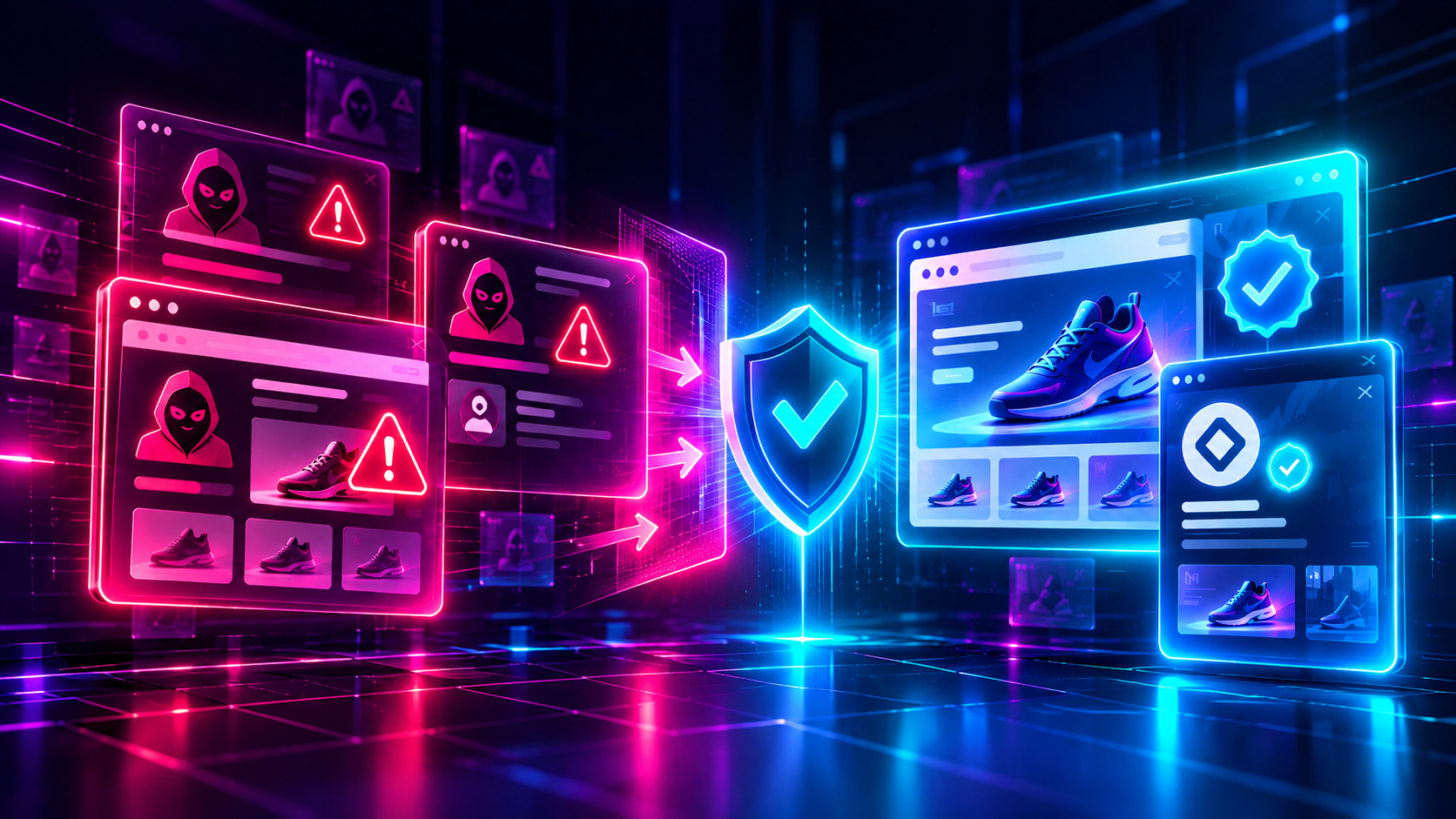
To spot fake products online, check for prices that seem too low, sellers with little or no history, blurry product images, missing contact information, risky payment methods, and suspiciously generic reviews. If even one of these warning signs appears, the product may be counterfeit.
The growth of eCommerce has made shopping faster and easier. It has also made it easier for counterfeiters to reach consumers. From fake sneakers and imitation electronics to counterfeit skincare and fraudulent weight-loss products, shoppers are increasingly exposed to fake products online without realizing it.
These are not harmless lookalikes. Counterfeit goods can waste your money, put your safety at risk, and damage the reputation of the brands you trust. With the rise of dupe culture on TikTok, Instagram, and online marketplaces, spotting a fake has become harder than ever.
So how can consumers protect themselves, and how can companies protect their brand online? This guide explains how counterfeit products work, why fake goods are so appealing, and how to spot fakes before they reach your doorstep.
What Is a Fake Product?
A fake product is an item designed to look like a genuine branded product. It may copy the brand name, logo, packaging, product images, descriptions, or design to make shoppers believe they are buying the real thing.
Counterfeit products are not always easy to identify. Some are low-quality copies, while others are designed to look highly convincing. In many cases, they create real risk. Counterfeit cosmetics may contain unsafe ingredients. Fake electronics may overheat or malfunction. Fake pharmaceutical products may contain the wrong ingredients, incorrect dosages, or no active ingredient at all.
The scale of the counterfeit economy is massive. According to the OECD/EUIPO 2025 report, global trade in counterfeit goods was valued at approximately $467 billion, equal to 2.3% of global imports. This is not a fringe issue. It affects fashion, electronics, pharmaceuticals, personal care, toys, luxury goods, and nearly every consumer category.
Dupe Culture vs. Counterfeit Products
The term “dupe” has become popular across social media. Short for “duplicate,” it usually refers to a cheaper product that looks or performs like a more expensive item. Dupe culture celebrates the idea of getting a similar look or experience without paying premium prices.
But there is an important difference between a dupe and a fake. A dupe may be inspired by a branded product, but it should not pretend to be the original. A counterfeit product uses a brand’s name, logo, packaging, or product identity to deceive buyers into thinking they are purchasing the real thing.
This distinction has become harder to see. Counterfeiters often promote fake products as “dupes” to make them seem more acceptable. Social media makes the problem worse because videos, influencer content, comments, and social commerce links can push shoppers toward suspicious sellers before they stop to verify the product.
How to Spot Fake Products Online: 6 Warning Signs
Learning how to spot fake products online is now an essential shopping skill. Counterfeiters are becoming more sophisticated, but most fake listings still leave warning signs.
1. Prices That Are Too Low
A major discount is not always suspicious, but a price that is far below the normal retail price should raise concern. If a product is listed at 70% to 90% below the official price, it may be fake.
Before buying, check the brand’s official website and compare prices across trusted retailers. If every legitimate seller is charging a similar price and one unknown seller is offering a huge discount, pause before purchasing.
2. Suspicious Sellers and Stores
Marketplaces such as Amazon, eBay, AliExpress, Temu, and TikTok Shop host large numbers of third-party sellers. Many are legitimate. Others are not.
Be cautious of sellers with no reviews, recently created profiles, vague feedback, incomplete business details, or names that seem unrelated to the product category. Also watch for websites that imitate official brand stores using names like “brandname-shop,” “official-brand-outlet,” or similar variations.
3. Poor Product Photos and Descriptions
Legitimate brands usually use clear images, consistent branding, and accurate product descriptions. Fake listings often use blurry photos, stolen images, mismatched packaging, poor grammar, or vague product details.
Small mistakes matter. Watch for misspelled brand names, strange logo placement, inconsistent colors, unusual product variations, or product specs that do not match the brand’s official listing.
4. Missing Website Information
A trustworthy eCommerce site should include basic information such as a clear return policy, privacy policy, contact details, and secure checkout. Scam sites often skip these details or use generic text copied from other websites.
Check whether the website uses HTTPS, whether the contact information looks real, and whether the return policy is specific. If you cannot find a reliable way to contact the seller, do not complete the purchase.
5. Risky Payment Methods
Be careful with sellers that only accept wire transfers, cryptocurrency, direct bank transfers, or peer-to-peer payments with no buyer protection. These methods make it harder to recover your money if the product never arrives or turns out to be fake.
Use trusted payment methods, credit cards, or reputable payment gateways that offer dispute resolution.
6. Generic or Overly Positive Reviews
Fake sellers often use fake reviews to make listings look trustworthy. If every review is short, vague, and overly positive, the reviews may not be real.
Look for reviews that include specific details, photos, verified purchase labels, and balanced feedback. Be cautious when a product has many reviews posted around the same time or when the wording feels repetitive.
How Brands Are Fighting Online Counterfeits
Consumers can take steps to avoid fake products, but brands also need to act. Counterfeiters move quickly across marketplaces, social media, websites, paid ads, and app stores. A fake listing can disappear from one platform and reappear under a different seller name, SKU, or product image.
That is why companies are investing in online counterfeit protection and marketplace monitoring. These tools help detect fake listings, trademark abuse, unauthorized sellers, copied product images, and coordinated seller networks.
Marketplaces are also increasing enforcement. Amazon reported that it seized and disposed of more than 15 million counterfeit products and proactively blocked more than 99.9% of suspected infringing listings before brands had to report them. TikTok Shop has also expanded its IP Protection Center and brand authorization workflows, reflecting the growing need for stronger protection inside social commerce platforms.
Still, brand owners cannot rely only on marketplaces to catch every threat. Counterfeiters often operate across multiple channels at once. A fake product may appear on a marketplace, be promoted through social media, supported by fake reviews, and linked from a cloned website.
Why AI Matters in Counterfeit Detection
Manual monitoring cannot keep up with modern counterfeiters. Bad actors constantly change product titles, images, seller names, descriptions, pricing, and storefront details to avoid detection.
AI-powered brand protection helps teams analyze large volumes of online activity and identify patterns that are difficult to catch manually. BrandShield’s AI.ClusterX threat clustering helps connect related listings, domains, sellers, social profiles, and fake ads so teams can see the larger abuse network behind individual threats.
This matters because counterfeiting rarely happens in isolation. A single fake listing may be connected to dozens or hundreds of related assets. By identifying those connections, brands can prioritize the most critical risks first and take action at scale.
Why Fake Products Are a Brand Protection Problem
Counterfeit products are not only a consumer problem. They are a serious brand protection issue. Fake goods can divert revenue, create support issues, damage customer trust, and weaken relationships with authorized sellers and partners.
For high-risk categories such as pharmaceuticals, cosmetics, electronics, toys, and personal care products, counterfeit goods can also create safety risks. A customer who receives a dangerous or defective fake may blame the legitimate brand, even if the brand had nothing to do with the sale.
This is why brands need continuous visibility across digital channels. Protecting customers means detecting counterfeit listings early, validating the threat, removing infringing content, and monitoring for repeat abuse.
How BrandShield Helps Detect and Remove Fake Products Online
BrandShield helps companies detect, prioritize, and remove counterfeit products across marketplaces, websites, social media, paid ads, and other digital channels. Our AI-powered platform monitors for fake listings, trademark misuse, copied product images, unauthorized sellers, impersonation, and coordinated abuse networks.
BrandShield combines AI-driven detection with expert-led enforcement. Our enforcement experts validate threats, collect evidence, submit takedown requests, escalate cases, and track results across platforms and authorities.
This gives legal, brand protection, eCommerce, and marketing teams the visibility and operational support needed to stop counterfeit activity faster and protect customers from fake products online.
Final Thoughts: If It Feels Off, Take a Closer Look
Counterfeit goods are not limited to luxury brands. They affect consumers, businesses, and marketplaces across nearly every industry. As eCommerce and social commerce continue to grow, fake products will become harder to spot and easier to distribute.
Before buying from an unfamiliar seller, check the price, product images, reviews, website details, payment method, and seller history. If something feels off, it probably deserves a second look.
For brands, the lesson is clear. Counterfeiters move fast, and a reactive approach is not enough. Companies need continuous monitoring, AI-powered detection, risk prioritization, and expert enforcement to protect revenue, customers, and brand trust.
Want to protect your brand from counterfeit threats?
Talk to a Brand Protection Expert to see how BrandShield helps detect and remove fake products online.
Frequently Asked Questions
How can I spot fake products online?
Look for unusually low prices, suspicious sellers, poor product photos, missing contact information, risky payment methods, and generic reviews. These are common signs that a product may be counterfeit.
What is the difference between a dupe and a counterfeit?
A dupe is usually a lower-cost alternative inspired by another product. A counterfeit uses a brand’s name, logo, packaging, or identity to make buyers believe it is the original product.
Are fake products dangerous?
Some fake products are only poor quality, but others can be dangerous. Counterfeit cosmetics, electronics, pharmaceuticals, toys, and personal care products may contain unsafe materials or fail basic safety standards.
Where are fake products usually sold?
Fake products often appear on online marketplaces, social media stores, cloned websites, paid ads, messaging platforms, and unfamiliar eCommerce sites.
How can brands remove counterfeit listings?
Brands can remove counterfeit listings by detecting the threat, collecting evidence, submitting platform-specific takedown requests, escalating repeat offenders, and monitoring for related activity. BrandShield helps manage this process at scale.