


How BrandShield Combines Incident Response & Threat Hunting for Unparalleled Cyber Brand Protection
Today’s external threat landscape is more challenging than ever. Cybercriminals are no longer relying on simple phishing emails or static impersonation sites; they are leveraging automation, AI-generated content, and scalable infrastructure to launch highly convincing attacks at unprecedented speed. According to Microsoft, phishing attacks have increased by over 60% year-over-year, while generative AI is enabling attackers to craft near-perfect brand impersonations in seconds. Gartner has also warned that by 2027, AI-powered attacks will significantly outpace traditional detection capabilities if not countered with equally advanced defenses.
This shift means that technology-exclusive detection alone is not enough. Organizations must be able to interpret, validate, and act on threats with precision. Separating real risk from background noise requires complimenting robust technology with deep expertise, contextual understanding, and continuous human oversight.
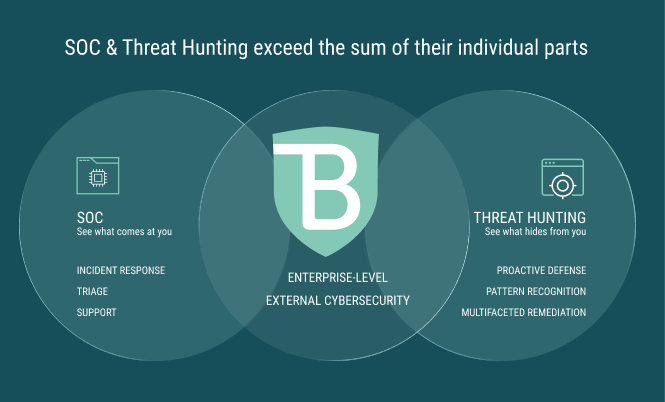
Behind BrandShield‘s technology, there are multiple teams deciding what’s real, what’s critical, and what gets taken down. We combine a 24/7 Incident Response (SOC) team with a team of seasoned Threat Hunters to deliver the optimal balance of speed, precision, and results.
The Perfect Match: AI and Human Expertise
BrandShield’s approach is built on a seamless integration of advanced external cybersecurity technology and expert human analysis. Our platform continuously detects impersonation across domains, social media, mobile app stores, paid ads, and the dark web to identify emerging threats across the external attack surface you don’t control. This includes sophisticated content detection, AI-driven impersonation analysis, and even threat detection across large language models (LLMs), where brand abuse is rapidly expanding.
At the core of this system is AI-powered risk prioritization and predictive threat clustering (AI.ClusterX), which connects seemingly unrelated signals into coordinated campaigns, helping surface the most critical risks faster. Automated workflows accelerate takedown processes across hosting providers, platforms, and registrars, while enforcement is validated by human experts to ensure accuracy and effectiveness.
This combination allows BrandShield to operate on a massive scale without sacrificing precision. AI handles continuous monitoring, enrichment, and detection, while teams of humans validate threats, apply business context, and complete enforcement. The result is not just visibility, but a fully operational defense layer that reduces risk.
Technology Alone isn’t Enough
AI has fundamentally changed how brands detect threats. It can scan millions of domains, ads, and social posts in real time, surfacing signals no human team could ever find alone.
But attackers are using AI too.
Phishing kits are now generated in seconds. Scam ads are dynamically personalized. Entire impersonation campaigns can be spun up overnight. In fact, 78% of CISOs say AI-powered threats are already having a significant impact on their organization.
The result isn’t only more threats, it’s more noise.
AI excels at detection and scale, but without human validation:
- False positives overwhelm teams
- Real threats get buried
- Critical incidents aren’t prioritized correctly
The Case for a Human Touch
Security leaders are already recognizing the shift. The most effective programs aren’t AI-only, they’re AI-augmented, where automation handles scale and humans handle judgment. AI can cluster signals, enrich data, and surface anomalies, but it lacks the business context and adversarial thinking needed to make high-confidence decisions.
That’s where human expertise becomes critical.
Effective online brand protection requires two distinct capabilities: real-time triage to separate signals from noise, and deep investigation to understand attacker behavior and stop campaigns at the source.
The Need for 24/7 Incident Response (SOC)
Threats don’t wait for business hours. A phishing campaign launched at 2 AM can reach thousands of users, steal credentials, and drive real financial loss, all before a traditional 9 AM team even logs in.
BrandShield operates on a follow-the-sun model, meaning:
- Teams are active across global time zones
- Threats are reviewed and acted on continuously
- Response begins within minutes, not hours
Think of SOC as a live operational unit running 24/7 against your external threat surface. BrandShield’s SOC is responsible for:
1. Validating AI-flagged threats
Not every alert equals a threat. SOC analysts review AI findings to confirm: Is this a real impersonation attempt? Is there user harm or financial risk? Is this actionable for takedown?
This ensures you or your Threat Hunter aren’t chasing noise.
2. Prioritizing with a “Critical Risks First” mindset
A suspicious Instagram account is not the same as:
- A phishing site collecting credentials
- A scam ad driving paid traffic
- A coordinated impersonation campaign
The SOC triages based on real-world impact, ensuring the most damaging threats are handled first.
3. Providing 24/7 support
BrandShield’s SOC doesn’t just monitor alerts; it operates as a continuous support layer for your organization. At any given moment, analysts are actively reviewing threats, initiating takedowns, and ensuring that no critical risk goes unaddressed.
This includes real-time escalation of high-risk incidents, ongoing communication, and full visibility into actions taken. Whether it’s a rapidly spreading phishing campaign or a newly discovered impersonation attempt, the SOC ensures immediate attention and coordinated response.
For security teams, this means there is always an expert actively protecting your brand, without gaps, delays, or reliance on internal availability.

What is enterprise threat hunting in brand protection?
If the SOC is responsible for real-time response, Threat Hunters focus on proactive intelligence and action: identifying and disrupting threats before they escalate. They can also manage takedown processes for all types of external threats, from the simplest to some of the most advanced, like MFA phishing, HTML cloning, and fake mobile apps.
BrandShield’s Threat Hunters proactively search for emerging threats, uncover new attack surfaces, and identify early indicators of compromise, as well as analyze incidents in depth, map attacker behavior, and build a full picture of coordinated campaigns to optimize your program.
Rather than treating threats as isolated alerts, the team connects the dots across infrastructure, templates, and attacker patterns. What initially appears as multiple unrelated incidents often reveals a single coordinated campaign, allowing for more strategic disruption and faster containment.
Over time, Threat Hunters develop a deep understanding of each customer, how they’re targeted, what matters most, and where attackers are likely to strike next. That’s what enables them to operate as a true extension of the customer’s security team.
How SOC and threat hunting complement one another
Once a threat is identified, it moves through a coordinated workflow that blends real-time response with deeper investigative analysis.
Detection, validation, prioritization, and enforcement don’t happen in isolation, they operate as a continuous feedback loop. Immediate response ensures active threats are contained quickly, while deeper analysis uncovers patterns, infrastructure, and connections that inform broader disruption.
The Incident Response and Threat Hunting functions reinforce each other: rapid triage drives immediate action, while ongoing investigation strengthens future detection and response.
Depending on the customer model, BrandShield can either deliver fully contextualized, actionable intelligence, or manage the entire process end-to-end.
Why this matters for your security stack
Security teams today are under constant pressure, facing alert overload, limited analyst capacity, and a rapidly evolving threat landscape driven by AI. At the same time, hiring and scaling internal teams remains a challenge, with 83% of CISOs citing talent shortages as a key barrier to effective defense.
BrandShield’s SOC and Threat Hunting teams extend your capabilities without adding headcount. Instead of managing more tools and alerts, your team gains continuous monitoring, expert validation, and full enforcement, delivered as an integrated operational layer.
The result is not just better visibility, but actual risk reduction.
98% takedown success, powered by the hybrid advantage
AI gives you scale. Humans give you precision. This hybrid model isn’t just a best practice; it’s becoming essential. Security leaders increasingly recognize that while AI accelerates detection, human expertise is what drives outcomes.
At BrandShield, that philosophy is operationalized:
- AI to detect everything
- SOC ensures nothing critical slips through
- Expert Threat Hunting for deep analysis and thorough remediation
Together, this creates a closed loop from detection to enforcement, delivering measurable results, faster response times, and the confidence that brand threats are being actively contained, not just monitored.